
Organic material does not disappear after pickup. Fuzion treats that stream as its own material category with defined handling steps. For many customers, the starting point is a simple question like what is organic waste, but the answer lies in how that material moves through each step of collection, sorting, and controlled composting.
How Organic Waste Is Defined In Fuzion’s Programs
Fuzion begins by setting clear criteria for what belongs in the organic stream.
What Counts As Organic Waste In Fuzion’s Stream
In Fuzion’s programs, organic waste refers to biodegradable material that began as plant or animal matter and can break down under the right conditions.
- Typical examples include food scraps, spoiled produce, coffee grounds, yard trimmings, and clean paper fibers.
- It does not include glass, metals, plastics, or heavily coated packaging, even when those items have been in contact with food.
Clarifying what is organic waste in practical terms gives customers a clear boundary between what belongs in an organics cart and what must stay in the trash or recycling stream.
How Organic Waste Behaves In Landfills Versus Composting Systems
Clear boundaries between organics and other waste are important because organic material behaves differently depending on where it ends up.
- In a landfill, food scraps and yard debris sit in compacted layers with little oxygen, so decomposition slows and pockets of anaerobic activity develop that generate methane and leachate.
- Inside a composting system designed for organic waste, the goal is the opposite: maintain oxygen, manage moisture, and let aerobic microbes transform that same material into stable compost that can return to soil.
From Separation To Delivery At The Composting Facility
Once the stream is defined, attention shifts to keeping organics separate and moving them into the composting system.
How Homes And Facilities Separate Organic Waste
Separation starts where organic material is first set aside from other waste. In homes, that might mean a small countertop container and a larger cart at the curb. In commercial sites, staff use clearly labeled bins to isolate food scraps and other acceptable organics from packaging and service ware. When managers at those sites take time to define what is organic waste for their teams, contamination drops and the collected material arrives at Fuzion’s trucks in better shape for processing.
How Fuzion Collects And Screens Incoming Loads
Drivers follow scheduled routes for residential neighborhoods, small businesses, and larger generators, watching for visible contamination as they go.
- Organics are transported as a dedicated stream instead of mixed with general garbage, which keeps the material suitable for the next phase of organic waste treatment.
- At the receiving facility or partner site, trucks are weighed in and out so programs can track how much material they are diverting from landfill.
- On the tipping floor, staff or equipment operators visually inspect the material and remove obvious contaminants such as plastic bags, utensils, packaging, glass, and metal.
Initial screening combines manual checks with mechanical equipment so non-organic material is cut down to a manageable amount for the rest of the process.
Inside Fuzion’s Controlled Aerobic Composting Process
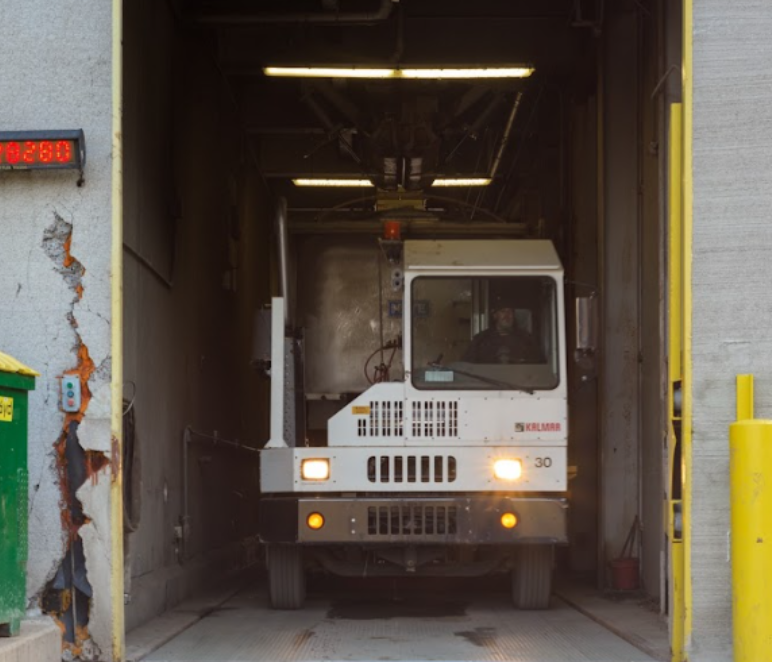
After intake and screening, the organics stream enters a managed composting environment where conditions are measured and adjusted.
How Fuzion Builds Each Composting Recipe
Once gross contamination has been reduced, the remaining organics are blended into a workable compost recipe.
- Food scraps and other wet materials supply nitrogen and moisture, while wood chips, yard debris, and other bulkier feedstocks supply carbon and structure.
- Staff monitor how the mix behaves, because texture, density, and moisture determine how air can move through the pile.
When operators understand what is organic waste in each incoming load, they can balance these variables quickly and keep new batches within the target range for active composting.
How Aerobic Composting Conditions Are Maintained
From there, the material enters a controlled aerobic phase designed to favor oxygen-loving microbes. Piles may be built into turned windrows or placed in aerated static piles or vessels where blowers move air through the mass from below. Across these systems, the objective is the same: keep oxygen available, maintain workable moisture, and let microbial activity generate the heat that drives decomposition.
Temperature and moisture become key indicators once the process begins. As bacteria and fungi consume readily available organic compounds, their activity raises the internal temperature of the pile. Operators monitor readings to confirm that material stays in the desired range and adjust turning, aeration, or bulking material if piles become too dry, too wet, or too cool.
Curing, Screening, And Final Compost Quality
As the most active phase winds down, the material begins to cool and move into a curing stage where the compost continues stabilizing as more resistant compounds break down.
Screening near the end of the process removes oversized pieces and any remaining visible contaminants, leaving a uniform compost that reflects both the feedstock and contamination controls used throughout the process. These final checks confirm that the compost is ready for use in soil applications without additional processing.
How Finished Compost Supports Soil And Communities
Finished compost leaves the facility as a soil-building input rather than a waste material.
Where Finished Compost Is Used
Once compost is finished, it becomes a resource that can support soil in landscapes, fields, and home gardens. Landscapers and growers use it to build new planting beds, refresh existing sites, and reinforce soil structure and water-holding capacity. Homeowners apply it in gardens and around trees where a small increase in organic matter can make the soil easier to work and better able to support plants through weather swings.
Environmental Benefits Of Composting Programs
When organics are collected separately, screened for contaminants, and moved into controlled aerobic composting, they reduce methane generation and long-term leachate concerns tied to mixed disposal. Communities gain more value from the same stream of material, because what left a kitchen or yard as waste returns as a soil amendment that can stay in circulation for years.
That loop reflects a practical answer to what is organic waste in Fuzion’s work. It is a material stream that can be managed and measured, then returned to the local environment in a more useful form.
Choosing A Composting Partner And Fuzion’s Role
Programs still need a partner who can keep daily collection and long-term composting goals aligned.
What To Look For In A Composting Partner
For many people, the search for a composting company near me or commercial composting solutions reflects a desire to see these steps happen in a predictable, local, and accountable way. The right partner collects carts on schedule, keeps contamination low, and provides reporting that aligns with internal goals or municipal requirements. In practice, that means treating collection, sorting, and composting as connected steps in one continuous process rather than as isolated tasks.
How Fuzion Supports Reliable Organics Programs
Fuzion’s role in that system centers on collection oversight and coordination with facilities that maintain controlled aerobic conditions.
- The team documents how much material is being diverted from homes, businesses, and job sites and works with customers to reduce contamination at the source.
- Loads are directed into processing environments where conditions are actively managed, so organic waste treatment becomes a predictable process instead of an uncertain outcome.
When customers understand what is organic waste in their kitchens, prep areas, and landscaping work, those everyday decisions line up with the way Fuzion manages the stream after pickup.
Turn Organic Waste Into A Local Resource With Fuzion
Fuzion collects food scraps and yard debris and delivers them to composting facilities that turn those materials into finished compost for local soil and landscapes. Our team manages containers, pickup schedules, and contamination checks so setting out organics works much like regular trash service. Contact us today for more information.