
Organic waste changes as soon as it enters the disposal stream. It begins breaking down, releasing moisture, and interacting with air or soil around it. Many communities now view that behavior as an opportunity. When organic material is handled in a controlled aerobic environment through waste management composting programs, it produces measurable environmental gains and reduces long-term disposal pressure on landfills that are already managing diverse loads.
How Landfilled Organics Behave
Landfilled organics decompose in low-oxygen settings that generate methane and create leachate that must be controlled.
- Microbes working under those conditions behave differently from the organisms active in well-aerated piles, and that shift drives the gas buildup associated with anaerobic breakdown.
- Aerobic composting responds with controlled airflow, balanced moisture, and sustained microbial activity that generates heat and water vapor, leaving behind material that soils can put to work.
Those outcomes give composting waste management a clear operational role in reducing methane generation and guiding how communities handle organics in their disposal stream.
Core Principles Behind Waste Management Composting
The biology of composting shapes what operators do next and explains why conditions matter so much at every stage. The science behind waste composting depends on balanced carbon and nitrogen, consistent moisture, and enough airflow to keep microbial activity moving.
When those elements align, heat develops in a reliable pattern and fibrous structures break down into stable material. When those conditions drift, piles may cool or airflow may slow, and odors often follow, giving operators a clear signal that adjustments are due.
How Separation And Collection Shape Composting Performance
Composting biology shows up directly in daily fieldwork, where crews watch temperature, moisture, and airflow respond to every load they handle.
- Separation and collection determine how reliably the system will perform, because organics must be removed from mixed waste before contaminants interfere with airflow or moisture movement later on.
- Operators emphasize correct bin use and route planning because the condition of incoming organics shapes every downstream task.
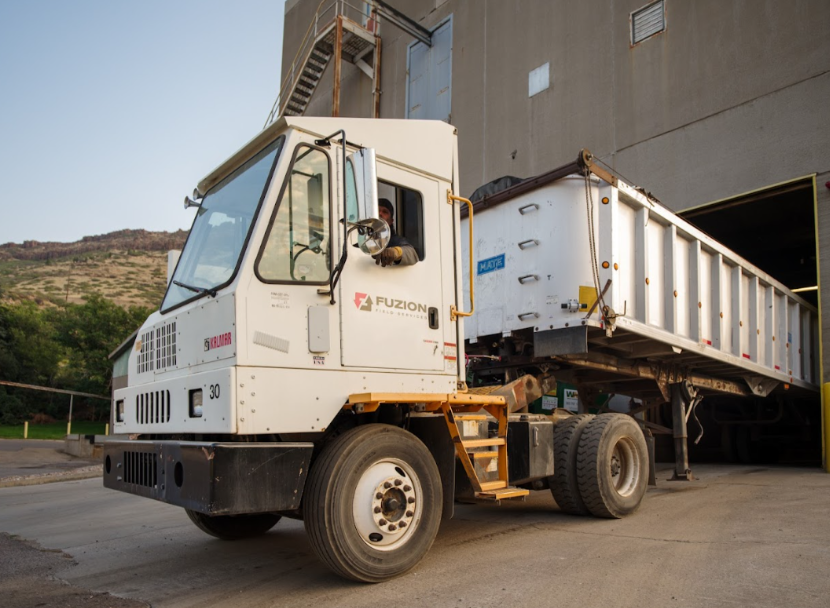
Fuzion deploys routes based on expected volumes, collects organic material in defined streams, and tracks incoming loads so contamination can be addressed before material moves to composting or other processing.
Feedstocks And Contamination Risks In Composting Streams
Effective separation depends on understanding which materials belong in a composting stream and which do not. Feedstocks such as food scraps, plant debris, and clean wood fibers support microbial activity, while plastics, treated wood, non-compostable packaging, and other contaminants disrupt airflow and moisture behavior inside a pile.
When unacceptable materials enter the stream, operators must separate them before processing or risk uneven decomposition and quality issues in the finished material. These controls remain central to waste management composting, because consistent feedstocks determine whether biological conditions can stay stable as the material progresses.
How Field Handling Supports Reliable Decomposition
Once separated, the material moves into field handling where conditions must stay aligned with the biology inside the pile. After collection, organics are transported to receiving points where they may be separated again and checked for particle size, density, and moisture.
These traits determine how air will move once the material is placed in piles or windrows. Operators maintain those piles through turning or controlled aeration to keep temperatures within the range that supports microbial activity and reduces pathogens, while crews track how the pile behaves over time and document the adjustments that keep it working.
Operational Challenges In Day-To-Day Composting
Composting systems that look stable on paper still have to contend with shifting conditions in the field. Crews see those changes first in moisture patterns, bulk density, and odor behavior.
Moisture swings:
– Excess moisture can fill pore spaces and restrict airflow through the pile.
– Dry conditions slow microbial activity and reduce the rate of decomposition.
– Crews respond by adjusting turning schedules or blending in structural material that keeps air channels open.
Changes in density and pile structure:
– Heavy or compacted zones reduce air movement even when overall moisture looks acceptable.
– Piles may settle unevenly as material breaks down, changing how air and water move.
– Operators reshape or rebuild sections of the pile to restore contact between air, moisture, and active microbes.
Odor events as process signals:
– Odor episodes often indicate compaction, insufficient oxygen, or excess moisture in specific zones.
– These events prompt operators to aerate or reconfigure the pile rather than treating odor as a surface issue alone.
– Tracking when and where odors develop helps crews connect process conditions to field adjustments.
Each of these challenges becomes part of routine documentation, because they show how the mass behaves under real conditions and how the composting process responds when operators change handling, structure, or airflow.
How Compost Improves Soil Health
Documentation from day-to-day composting work connects directly to soil outcomes once the material stabilizes. Finished compost strengthens soil structure, improves water retention, and supports microbial diversity that plants rely on. In compacted or nutrient-poor soils, compost shifts the physical environment so water moves more freely and roots can get established with far greater stability.
Stable carbon and organic matter provide long-term value, and many landscape managers use compost to reduce reliance on synthetic fertilizers, tying everyday soil performance back to how the material was handled from the start.
Composting System Types For Different Scales
Different composting systems apply the same biological principles through distinct operational setups.
- Windrow systems rely on linear piles turned at scheduled intervals to regulate airflow and moisture, while aerated static piles use blower systems to move air through the mass without turning.
- In-vessel systems enclose the material entirely, controlling airflow, temperature, and retention time with greater precision.
Each configuration supports waste management composting at different scales, and the choice depends on space, feedstock mix, regulatory expectations, and how quickly material needs to stabilize.
Scaling Waste Management Composting For Communities
Scaling waste management composting requires adapting these fundamentals to the volume and diversity of incoming material across homes, businesses, and facilities.
- Households may use small bins, and neighborhoods often consolidate organics at staffed drop-off points.
- Municipal and commercial programs handle larger piles or aerated static systems that demand close oversight of airflow, temperature, and moisture.
- Crews also maintain inspections and documentation that align with local and state rules for odor control and water management.
Policy And Program Design For Organics Diversion
Policy frameworks shape how organics move through a community’s waste system.
- Municipalities may set diversion targets, define acceptable materials, or establish reporting requirements tied to broader environmental goals.
- Programs that emphasize organics capture typically rely on audits, tracking systems, and clear guidelines so material flows through the waste stream predictably.
These policies encourage consistent participation and give communities a way to understand and communicate the environmental benefits of their diversion work.
Long-Term Outcomes Of Waste Management Composting
Upstream separation, handling, and policy decisions influence long-term environmental results across the system. Over time, waste management composting redirects organic material away from landfills and into soil systems where it provides lasting physical and biological value. Programs built around composting and organic waste management help communities handle organics as a controlled, recoverable material they can put to productive use again.
Fuzion’s role is to collect organics responsibly, maintain separation, transport material to appropriate handling points, and document each step so clients can comply with municipal expectations.
Partner With Fuzion To Turn Organics Into Documented Environmental Progress
Fuzion collects, separates, and transports organic material using documented processes built around EPA and state regulatory standards. Each load is tracked and documented so clients receive accurate diversion and disposal reporting for municipal or project requirements. Contact us today for more information.