
Organic waste follows very different paths once it leaves a home, restaurant, or commercial site. Food scraps and yard debris may look the same at the curb, yet the systems that receive them determine whether those materials become a long-term liability or a recoverable resource. That distinction sits at the center of the compost vs landfill discussion and explains why disposal method matters long after collection.
How Organic Waste Behaves After Collection
Once organic waste enters the waste stream, system design dictates what happens next. Landfills and composting facilities manage material under fundamentally different conditions, and those conditions determine whether organic matter is suppressed or transformed.
Landfills are engineered to isolate waste from air and moisture, prioritizing containment and risk control. Composting systems work the opposite way, encouraging biological activity under managed conditions. These opposing approaches explain why the same food waste produces very different environmental outcomes. Location decides behavior.
What Happens to Food Waste in a Landfill
Landfills control risk by isolating waste from air and moisture, and that design choice drives most downstream impacts.
Anaerobic Conditions Drive Slow Breakdown
In most communities, landfills remain the default destination for mixed waste, shaping how organic material performs in the broader compost vs landfill equation. These sites are engineered for containment rather than material recovery. Waste is compacted into dense layers and sealed off from oxygen, conditions that suppress aerobic microbes and favor slow anaerobic decomposition.
Methane Formation And Gas Collection Limits
Under these oxygen-starved conditions, methane-producing microorganisms dominate. As food waste breaks down, methane accumulates as a long-term gas management challenge rather than a recoverable byproduct. Even where landfill gas capture systems exist, collection efficiency varies over time and does not eliminate emissions entirely.
Nutrient Lock-Up And Long-Term Volume Pressure
Nutrients trapped in buried organic waste remain inaccessible. Nitrogen, carbon, and trace minerals that could have been returned to soil are locked into closed landfill systems. At the same time, organic material continues to occupy physical space, accelerating landfill expansion, increasing hauling distances, and driving higher long-term disposal costs.
Leachate Management And Persistent Byproducts
Beyond gas generation, landfills must also manage leachate, the liquid formed as moisture moves through decomposing waste.
- Organic material contributes to leachate strength by releasing dissolved nutrients and organic compounds that require collection, treatment, and monitoring for decades.
- Liners, caps, and drainage systems control exposure, but they do not change the underlying chemistry.
From a systems perspective, this reinforces the compost vs landfill distinction: one pathway isolates organic material and manages its byproducts indefinitely, while the other allows those same materials to stabilize and exit the waste stream.
How Composting Breaks Down Organic Waste Differently
Composting relies on managed biological conditions that keep decomposition aerobic and predictable.
Aerobic Decomposition Changes The Gas Outcome
Composting channels organic waste through a very different process, reinforcing why the compost vs landfill comparison hinges on system design rather than intent. Instead of isolation, composting relies on controlled exposure to oxygen, moisture, and microbial activity.
- In managed composting systems, bacteria and fungi break down food scraps and yard waste through aerobic decomposition.
- Oxygen availability shifts the chemistry of breakdown, favoring carbon dioxide release rather than methane and allowing organic matter to stabilize more quickly.
When thermophilic temperatures are reached and maintained, heat generated by microbial activity accelerates decomposition while reducing pathogens and weed seeds.
Microbial Performance Depends On Environmental Control
Microorganisms function as the engine of composting, and their performance depends on environmental control. Oxygen levels determine whether aerobic microbes dominate or methane-producing organisms emerge. Moisture influences microbial mobility and heat retention, while particle size and carbon-to-nitrogen balance affect breakdown speed.
When these variables are managed correctly, composting steers decomposition away from methane formation and toward stable organic matter. This level of control explains why the compost vs landfill outcome is driven by process conditions rather than the material itself.
Nutrients Stay In The Material And Return To Soil
When moisture and airflow remain balanced, nutrients stay within the finished material rather than escaping as landfill gas or leachate. The result is compost that can be returned to landscapes or agricultural soil, completing a material cycle rather than ending it.
Where Recycling Fits—and Where It Fails
Recycling systems serve a different purpose within waste management. They are designed to recover clean paper fibers, metals, glass, and certain plastics. Organic contamination undermines those systems by increasing rejection rates and processing costs.
- Food waste does not belong in recycling streams because it degrades material quality and disrupts sorting processes.
- Composting fills that gap by providing a dedicated pathway for organic materials that cannot be recycled yet still hold value.
This separation clarifies the compost vs recycling vs landfill decision. Each system performs best when materials are routed according to how they behave, not how they are labeled.
Why Compostable Products Still Fail in Landfills
Packaging labeled as compostable behaves very differently depending on where it ends up.
- In composting facilities, these materials can break down alongside food waste when conditions support microbial activity.
- In landfills, they face the same oxygen-deprived environment as other organics.
Without airflow, moisture balance, and microbial diversity, compostable products persist far longer than intended and may generate methane as they slowly degrade. Labeling alone does not change outcomes. Routing determines performance.
Operational Limits That Shape Composting Outcomes
Composting programs deliver consistent diversion only when collection rules and processing conditions stay stable from pickup through tipping.
Process Constraints That Affect Emissions And Nuisance Risk
Composting is not without constraints, yet responsible comparisons acknowledge those limits. Poorly managed compost piles can attract pests, generate odors, or produce methane if oxygen levels drop. Contamination from plastics, metals, or hazardous materials reduces compost quality and increases processing costs.
Collection Logistics And Generator Consistency At Scale
At scale, composting succeeds or fails based on logistics. Organic waste must be separated correctly, collected on appropriate schedules, and delivered to facilities equipped to manage volume and contamination. Commercial generators produce organic waste daily, which makes consistency a performance requirement rather than a best practice.
Contamination Controls That Prevent Disposal Reversion
Contamination remains one of the most common failure points.
- Plastic bags, mislabeled compostable packaging, treated wood, and food-contact materials can compromise finished compost and force loads back into disposal.
- Clear container rules, consistent signage, generator education, and reliable collection schedules determine whether composting delivers its environmental advantage in the compost vs landfill comparison or collapses back into disposal by default.
Execution decides the outcome.
Why Composting Delivers a Greener Result When Managed Correctly
Composting’s advantage shows up most clearly when you separate emissions behavior, downstream soil value, and the system role each pathway is designed to serve.
Emissions Tradeoffs Depend On Process Control
From an emissions standpoint, composting still produces greenhouse gases. Carbon dioxide release is part of aerobic decomposition, and small amounts of methane can form if conditions drift out of balance. The difference lies in magnitude and control.
Lower Methane Exposure And Measurable Soil Gains
Properly managed composting generates significantly less methane than landfilling the same material. Finished compost improves soil structure, increases water retention, and supports plant growth when applied to landscapes or agricultural land. Landfills offer none of these secondary gains, as materials remain isolated and inaccessible.
Containment Versus Transformation Drives Outcomes
The question of compost vs landfill ultimately reflects how communities choose to manage biological materials. Landfills are designed for containment. Composting facilities are designed for transformation. When applied to organic waste, those roles diverge sharply.
Support Organic Waste Diversion With Fuzion’s Collection Programs

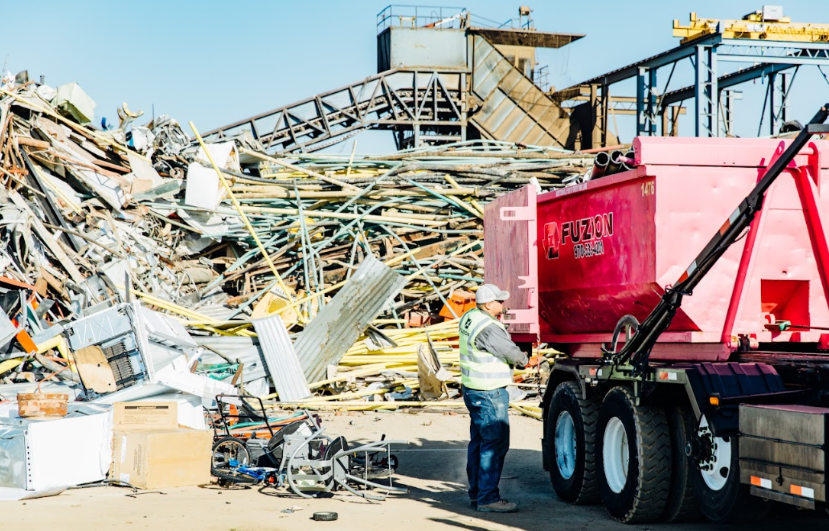
Fuzion manages organic waste collection programs that help divert food scraps and other organics away from landfills and toward appropriate processing facilities. Collection coordination, container management, and routing decisions determine whether organic materials reach composting operations consistently. Contact us today for more information.