
It is early Monday morning. The dumpster is overflowing, a portable toilet has not been serviced, and the superintendent has three different phone numbers to call. Cleanup slows down, crews start asking about the restroom and dumpster, and every call leads to a different vendor; that is the first test of construction site services risk management.
Where Construction Site Services Risk Management Breaks Down
Multiple vendors are manageable when the jobsite is quiet and service happens on schedule. The risk shows up when the job changes, a vendor misses a window, or the field needs a faster answer than the normal service chain can provide. At the jobsite level, construction site services risk management means planning dumpsters, sanitation, fencing, water, and related field support so service issues have an owner before they slow the work.
Multiple vendors are not the problem by themselves. Risk builds when schedules sit in different systems, dispatch decisions run through different teams, and responsibility is split across several providers. Every delay in reaching someone who can act keeps the site working around a problem that should already be moving. A full dumpster, a missed sanitation service, or a fencing issue can turn into several calls when every service sits with a different vendor.
When A Vendor Fails, Who Owns The Problem?
A vendor no-show becomes a project risk when the GC has to stop managing the job and start chasing answers. The superintendent should not have to figure out which company missed a route, which dispatcher can approve a swap, and which account rep has authority to make the call. That lost time shows up in the field.
The problem gets worse when vendors go quiet. A missed pickup with no response is a schedule problem, because the project team cannot make a clean decision about cleanup, access, staging, or additional service. Split responsibility also makes it easy for each vendor to treat only its own scope as urgent, which leaves the project team carrying coordination risk that should have been controlled before the service gap reached the field.
Sanitation And Waste Lapses Can Become Jobsite Exposure Fast
Sanitation and waste problems become jobsite exposure when they interrupt crew movement, cleanup, staging, or access.
Portable Sanitation Problems Hit Crew Productivity Quickly

Portable sanitation is easy to ignore until it fails. When portable sanitation is missed, crews notice immediately. If units are not serviced or placed correctly for the jobsite, the issue can affect productivity, crew morale, and compliance exposure.
When crews lose access to serviced restrooms, the lapse affects more than comfort. It changes how the field functions during the workday. The restroom issue becomes another problem the superintendent has to solve while the job is still moving.
Waste Removal Problems Slow Cleanup And Access
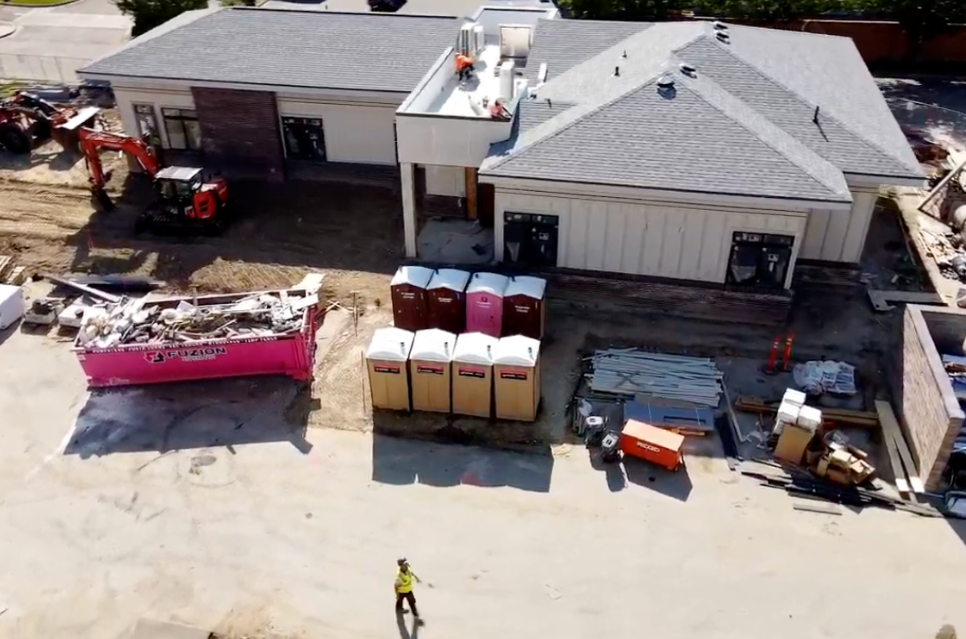
Waste removal puts pressure on cleanup, access, and daily site movement. A missed roll-off dumpster service can leave debris where it does not belong, slow cleanup, create access problems, or force the field team to work around material that should already be gone. Debris in the wrong place can also become a site-control concern when it interferes with access, staging, or safe movement.
When debris blocks cleanup, staging, or movement, the problem is no longer limited to waste removal. It can affect productivity, site conditions, and compliance exposure. Good construction site services risk management accounts for how the site actually runs, how often waste builds up, how many workers are using sanitation units, and what happens when the schedule changes. A jobsite that grows more active during a phase shift may need faster swaps, more units, added wash stations, or better coordination between waste and sanitation schedules.
One Accountable Vendor Reduces The Number Of Failure Points
Once a service lapse starts affecting the field, the next question is who has the authority to fix it. Single-vendor accountability gives the project one contract, a clear escalation path, a coordinated service schedule, and a contact who can move related site-service issues toward resolution. When a capable provider handles the broader service picture, the superintendent does not have to translate the same issue across several vendors.
That does not mean every problem disappears. It means the response path is cleaner. A dispatch call can trigger the right internal action instead of forcing the GC to call separate providers for dumpsters, sanitation, fencing, or other site needs. One point of contact is useful, but it only becomes accountability when that provider controls dispatch decisions and service response.
For construction site services risk management, the advantage is a provider with enough context to connect related issues. If the dumpster needs a swap, the portable toilets need service, and the site entrance needs an adjustment to temporary fencing, an accountable provider can see how those issues affect the same jobsite. The project team has fewer handoffs, a better chance of correcting the field condition quickly, and a clearer view of what was requested, what changed, and who is responsible for the next step.
Bundling Only Reduces Risk When The Vendor Can Actually Perform
Bundling is not automatically safer. If the provider accepts more work than it can staff, the site may end up waiting on the only vendor authorized to fix the service issue. The wrong provider can weaken construction site services risk management by becoming the only call the GC can make and still failing to answer, backfill, or fix the issue.
The vendor has to control the work in the field. That means equipment capacity, trained drivers or service teams, clear dispatch, responsive account management, and a backup plan when the schedule changes. A real backup plan may include replacement unit availability, route coverage, urgent dumpster swap procedures, and after-hours escalation when the site condition changes.
Capacity Matters More Than The Service List
The same point applies when the service scope gets wider. Dumpsters and portable toilets may be the starting point, but many active sites also need fencing, water, and field services such as hydrovac services during utility or excavation work. Bundling helps only when the provider can keep up with the actual site conditions, not merely quote a longer list of services.
Questions To Ask Before You Bundle Site Services
A bundled service plan should prove itself before the job depends on it. That is the real vendor test for a bundled site services plan.
- Do you own and operate the equipment, or are services brokered through third parties?
- Who is my account contact when something fails in the field?
- What services can be scheduled under one plan?
- How do you handle missed service, overflow, urgent swaps, added units, or schedule changes?
- What is your normal service area, and what backup capacity is available when demand spikes?
- Can your team coordinate dumpsters, sanitation, fencing, hydrovac, and water around different project phases?
- How are service frequency, pickup timing, route changes, and change orders documented?
- What happens after hours or during urgent site conditions?
These questions protect the project from assuming that one vendor automatically means one accountable system. A good answer should be specific. The vendor should be able to explain who answers, who dispatches, who owns the equipment, how service changes are documented, and what happens when the field needs a decision quickly.
Construction risk mitigation starts before the missed service call. It starts when the project team chooses a service partner that can match the pace, geography, access constraints, and field conditions of the job. The right setup gives the superintendent a clear call to make and gives the office a clear record when conditions change.
Plan Commercial Site Services Before Gaps Show Up
For Colorado commercial projects, Fuzion operates dumpsters, portable sanitation, hydrovac, temporary fencing, and potable water under one dispatch and one account contact. Those services are handled directly rather than brokered through a marketplace. That gives project teams a way to plan commercial site services around the way the job actually runs instead of treating every missed service as a separate emergency.
Bring the site plan, expected crew size, project phases, access concerns, and service needs into the planning conversation early. Contact us today for more information.