
One active site needs a dumpster swap-out, another is overdue for toilet service, and a third just doubled its crew for the next phase. When multi-site waste and sanitation are poorly coordinated, one missed update can turn into extra phone calls, crew complaints, blocked access, and preventable field disruption. At that level, construction waste management has to be run as a service coordination system, not a separate task for each job.
Build The Construction Waste Management Service Board Before The First Delivery
The service plan should be in place before the first dumpster or portable toilet is delivered. Each job can have different needs, but the schedule, updates, and escalation path should be managed from one place.
Start with a service board that tracks every active site by address, superintendent, service type, next service date, access notes, and vendor contact. The board does not need to be fancy. It just needs to show what is due this week, who owns the next update, and which site condition could affect service.
Ownership matters because every site keeps changing. When every superintendent updates a different vendor directly, nobody has a clean picture of what is happening across the portfolio. When one internal owner manages dumpster logistics and job site sanitation services from the same board, each site still gets what it needs without turning every service change into a separate vendor call.
Right-Size Each Site By Crew Count And Project Phase
Right-sizing each site means planning for the work that is actually happening, not the average condition on the original schedule. A site in early excavation does not carry the same waste volume or sanitation demand as a site with framing, MEP, roofing, and interiors running at the same time.
Match Dumpsters To Debris And Access
For waste, start with the debris profile. Demolition, concrete packaging, framing cutoffs, and tenant-finish debris do not fill containers the same way. A smaller container with predictable swaps may work better on a tight urban site, and a larger roll-off may make sense on a site with room, high debris volume, and fewer access restrictions.
Commercial contractors who use commercial dumpster services should match container size, pickup frequency, and placement to the phase instead of waiting until the box is already overfilled.
Adjust Sanitation Before Crew Counts Peak
For sanitation, the starting point is the crew count. OSHA’s construction sanitation standard uses employee counts to determine minimum toilet facilities, so the plan needs to follow the number of workers actually on site. A site with 15 workers may start with a simple setup. That same site may need added units or increased service when the structure phase brings several trades together.
The right portable toilet count changes as the job phases. Site prep may run with a small crew, the structure and MEP overlap may create peak demand, and closeout may reduce total workers while spreading them across more finished areas. Planning portable toilet rental for construction sites by phase helps prevent the usual field problem: the unit count gets set once, then nobody revisits it after the crew size changes.
Good construction waste management connects these two planning tracks. If a phase change increases debris volume, it often increases manpower too. That means the same milestone that triggers a dumpster review should also trigger a sanitation review. The trouble usually starts when the old setup stays in place after the job has moved into a different phase.
Keep OSHA Ratios Current As Crew Counts Move
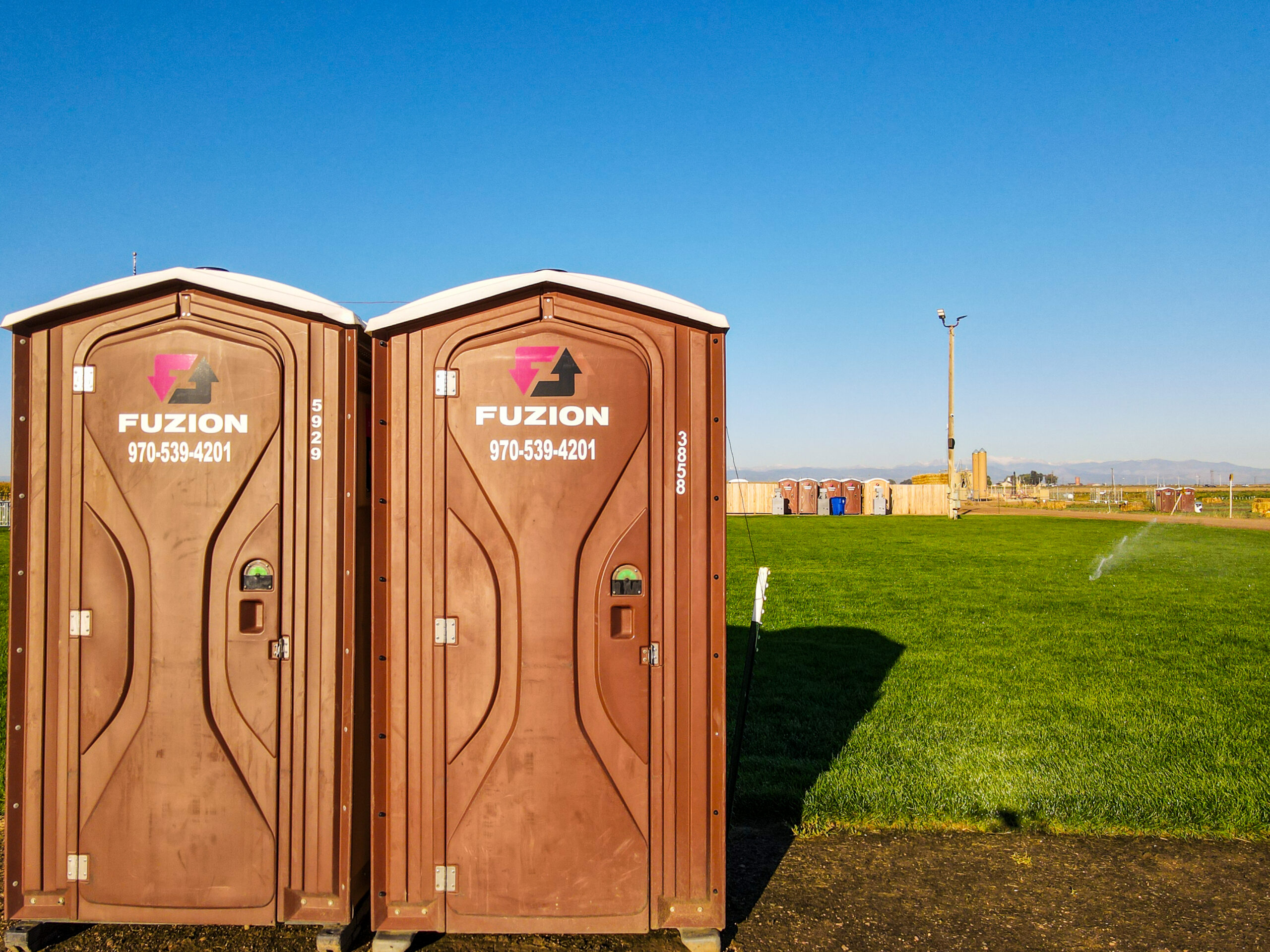
To keep each site aligned with OSHA sanitation requirements, review the toilet count whenever the crew count, shift schedule, work area, or project phase changes.
For construction sites, OSHA requires at least one toilet facility under temporary field conditions. For 20 or fewer employees, at least one toilet facility is required. For 20 or more employees, the standard increases to one toilet seat and one urinal per 40 workers. At 200 or more employees, the ratio changes to one toilet seat and one urinal per 50 workers.
Adjust For Field Conditions, Not Paper Counts
Those ratios give the starting point, then site conditions shape the final setup. A large site may need more units because of distance, vertical access, shift overlap, mud, winter conditions, or restricted movement through the site. The paper count is only the starting point because workers still need reasonable access to clean, serviced units without losing time or creating complaints.
If a superintendent adds a trade, doubles a shift, accelerates a phase, or opens a new work area, that update should trigger a sanitation review. The review may lead to more units, a relocation, an added handwashing station, or a higher service frequency.
Lapsed sanitation has two costs. The first is compliance exposure, including potential citations or fines if required facilities are not provided or maintained. The second is immediate field disruption: complaints, emergency calls, lost production, and time spent fixing a problem that should have been adjusted before the crew arrived.
Schedule Swap-Outs And Servicing Around Milestones
The same phase changes that affect sanitation should also trigger a review of dumpster swap-outs and service timing. Calendar-based service is useful, but construction sites do not create waste or sanitation demand in a straight line.
A demolition week can fill a roll-off faster than two weeks of light finish work. A concrete pour may not create the same debris volume, but it can create access restrictions that affect pickups. A framing push can fill containers quickly and bring extra workers onto the site. Interior finish may reduce heavy debris but increase packaging waste, cardboard, and daily cleanup needs.
For construction waste management, the next phase should drive the service plan: what work is coming, and what will it do to demand? If the next two weeks include demolition, framing, roofing, or major deliveries, schedule the swap-out before the container becomes a bottleneck. The service owner should check upcoming high-volume work, compare sanitation counts against expected manpower, confirm access changes, and verify scheduled pickups or cleanings before the trucks roll.
Missed service also affects the construction budget in ways that do not always show up as a clean line item. Full dumpsters slow cleanup, poor sanitation creates field friction, and avoidable service calls pull attention away from planned work.
Choose One Provider Or Local Specialists By Control Risk
Once the service rhythm is defined, the vendor model has to support it across every active site. The vendor decision should start with control risk. Use one provider when coordination risk is the bigger problem; use separate local vendors only when location, specialty service, or route practicality outweighs central control.
When One Provider Makes Sense
One provider usually makes sense when the contractor needs consistent scheduling, one escalation path, cleaner billing, and fewer vendor calls across several active sites. A single-provider model works especially well when sites are clustered across the same operating area and need recurring dumpsters, toilets, fencing, hydrovac, potable water, or other temporary services.
The real advantage is visibility: one account and one point of contact make it easier to see what is scheduled, what was completed, what needs to change, and who owns the next action.
When Local Specialists May Be Better
Separate local vendors can still make sense. If one project sits outside the main provider’s practical service range, or if a site has a specialized local requirement, a local provider may be the better fit. The tradeoff is management load. Every added vendor creates another contact, invoice, service calendar, access note, and escalation path.
Questions To Ask Before You Assign Multiple Sites
Before assigning a provider to multiple sites, ask operational questions:
- Who is the single escalation contact?
- How are missed pickups or missed cleanings confirmed and corrected?
- Can the provider support multiple active addresses under one account?
- How are swap-outs, cleanings, delivery tickets, and service records documented?
- How much notice is needed for phase changes or crew increases?
- Can the provider coordinate dumpsters and sanitation together, or will those run through separate dispatch paths?
This is where construction waste management becomes a vendor-control issue. The best setup is the one that reduces handoffs without creating blind spots.
Track The Details That Usually Create Service Gaps
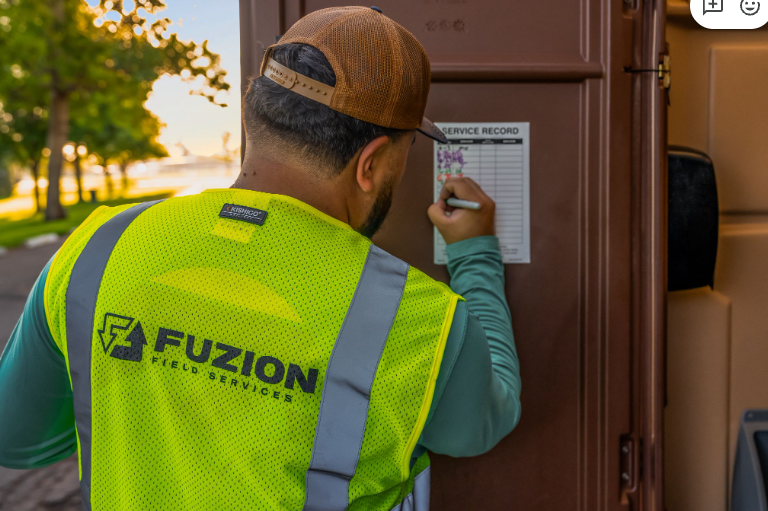
Service tracking should focus on confirmation and access, not dates alone. Most gaps start when the schedule is current on paper and the field has already changed.
Confirm What Happened, Not Just What Was Scheduled
A roll-off cannot be swapped if the access road is blocked. A portable toilet cannot be serviced if the gate code changes. A sanitation setup can fall short if the crew count doubles and nobody reviews the toilet count, placement, or service frequency.
A construction waste management tracker should show the current condition of each site. At minimum, track the address, site contact, dumpster size, waste stream, toilet count, service frequency, last service date, next service date, access notes, and confirmation status. For larger portfolios, add columns for phase, crew count, billing code, ticket number, and required follow-up.
Confirmation is the detail that keeps a scheduled service from being assumed complete. The tracker should show whether the vendor confirmed the service, whether the field confirmed completion, and whether any issue needs escalation.
Review the service calendar before the week starts, so access changes and crew-count updates are caught before they affect sanitation. The owner should compare scheduled services against project milestones, confirm known access changes, and update crew-count changes before they affect sanitation.
New Site Setup Checklist For Waste And Sanitation
A new site should not go live until waste and sanitation are built into the startup plan. This checklist gives the PM or operations lead a simple way to launch each site without recreating the process from scratch.
- Confirm the site address, gate access, delivery route, and placement restrictions.
- Name the superintendent or field contact responsible for service updates.
- Record vendor contact, escalation contact, and after-hours procedure if available.
- Select the starting dumpster size based on phase, debris type, access, and expected volume.
- Confirm whether the site needs separate containers for specific waste streams.
- Set the first swap-out trigger before the container is delivered.
- Estimate the starting crew count and expected peak crew count.
- Set the initial portable toilet count from the current crew size.
- Add handwashing stations or specialty units when the site conditions require them.
- Schedule sanitation service frequency before the first crew arrives.
- Add a crew-count review trigger for each major phase change.
- Add the site to the portfolio service board.
- Create a documentation folder for delivery tickets, pickup records, service confirmations, and billing notes.
- Review the setup before demolition, structure, MEP overlap, finish work, and closeout.
The checklist should be used the same way on every site, even when the actual setup changes. Consistency keeps the process manageable. Site-specific decisions keep the plan from becoming too generic to work.
Set Up Multi-Site Service Coordination With Fuzion
Fuzion helps contractors coordinate dumpsters, sanitation, hydrovac, fencing, and potable water across active Colorado projects with one account and one point of contact. If your team is managing several sites, we can help build a service plan around crew counts, access needs, and project phases. Contact us today and set up multi-site service coordination across your Colorado jobs.