
Choosing between a hydrovac and a dry vacuum truck can affect excavation speed, spoil handling, and performance in difficult ground. Both can remove large amounts of soil, rocks, and debris while reaching areas that may be difficult to access with conventional excavation equipment. Understanding the differences between hydrovac trucks vs dry vacuum trucks can help you choose the right equipment for the ground conditions, spoil requirements, and jobsite constraints.
Hydrovac Trucks vs Dry Vacuum Trucks at a Glance
| Comparison Factor | Hydrovac Truck | Dry Vacuum Truck |
|---|---|---|
| How it works | Pressurized water loosens soil; vacuum removes slurry. | Vacuum removes material; some units use air to loosen soil. |
| Best soil types | Dense, compacted, muddy, rocky, or frozen soils. | Loose, dry, granular, or previously disturbed soils. |
| Excavated material reuse as backfill | Slurry usually needs processing before reuse. | Dry spoil may be reused if suitable and compactable. |
| Tank capacity | Usually smaller because the truck also carries water. | Often larger; capacity varies by truck. |
| Operating reach | Varies by truck and hose setup. | Varies by truck and hose setup. |
| Best use cases | Utilities, potholing, trenching, and difficult ground. | Loose material, dry-spoil reuse, and water-restricted jobs. |
| Frozen ground capability | Can excavate frozen ground when equipped with heated water. | Limited unless material can be loosened without water. |
| Dust/mess factor on site | Generally less airborne dust, but creates slurry. | Keeps spoil dry, but can create dust. |
What Are Hydrovac Trucks?
Hydrovac trucks are one type of vacuum excavation equipment. Unlike dry vacuum trucks that rely on suction power alone to remove dirt and debris, hydrovac trucks combine the power of pressurized water with a powerful vacuum to remove dirt and debris.
How Hydrovac Trucks Work
The process of using a hydrovac truck for excavation involves several steps. First, the operator uses a high-pressure water system to create a soil and water slurry. The slurry is then removed by the vacuum system and stored in the debris tank on the truck. The process is repeated until the desired excavation depth is achieved.
What Are Dry Vacuum Trucks?
Unlike hydrovac trucks, dry vacuum trucks don’t use pressurized water to break up dirt and debris. Instead, these trucks rely on a powerful vacuum to collect dirt, small rocks, asphalt pieces, leaves, and other debris. Some dry vacuum truck models are equipped with a handheld air spade (instead of a high-pressure water wand) to loosen soil and break up larger materials.
Even though they’re commonly referred to as ‘dry vacuum trucks’, many of these models are capable of collecting wet substances, slurries, and even liquids in addition to dry items listed above. The term ‘dry’ describes the excavation process rather than what can be collected.
How Dry Vacuum Trucks Work
A dry vacuum truck uses a powerful vacuum pump to create suction, which allows it to collect and transport various materials, such as liquids, sludge, and debris. The collected material is stored in a tank on the truck and, when suitable for the project, may be reused as backfill or transported for disposal.
Comparison of Hydrovac Trucks and Dry Vacuum Trucks
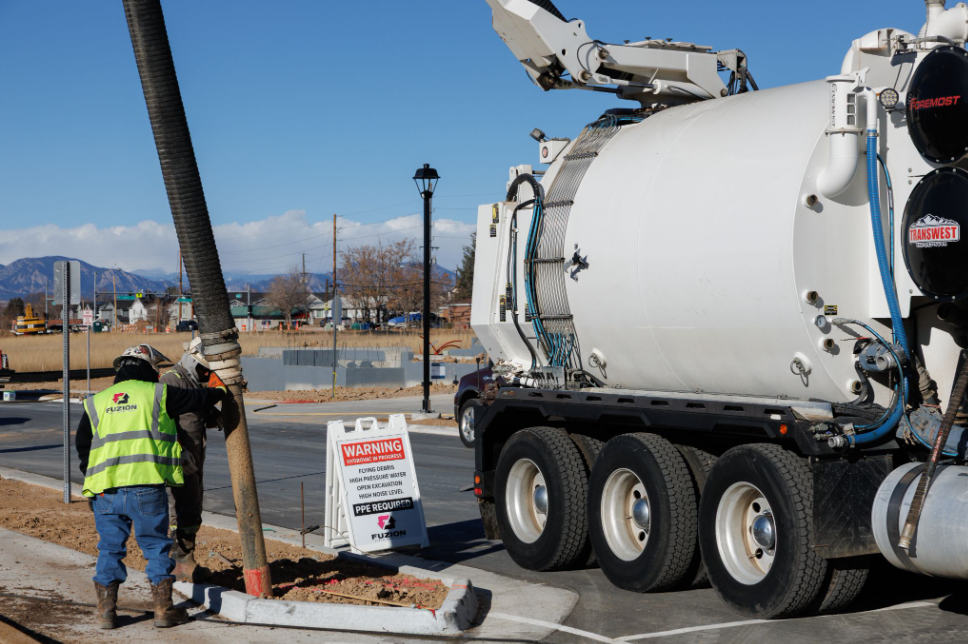
Hydrovac and vacuum trucks are commonly used in the construction, excavation, and waste management industries. However, while they share some similarities, there are several key differences between these two types of trucks.
Before settling on a hydrovac or dry vacuum truck for your excavation job, here are essential points to bear in mind. These should be taken into consideration before coming to a conclusion.
Purpose
Hydrovac trucks are primarily used when thick materials like soil and sludge need to be broken down with water before removal. Vacuum trucks are mainly used when pressurized water is not required to collect debris like dirt, small rocks, leaves, etc.
Technology
Both types of vacuum trucks utilize a powerful vacuum to suck debris into a holding tank for disposal. Hydrovac trucks combine a vacuum with high-pressure water to first break up debris and form a slurry before sucking it into the holding tank.
Speed and Efficiency
There’s no denying that hydrovacs are quicker at excavating in most soil types. However, this doesn’t necessarily mean they are always more efficient when it comes to completing the entire job.
Since dry vacuum trucks do not use water during excavation, they have the capability to dump the materials back onsite to be reused for backfilling. This can save a lot of time since the soil won’t have to be reclaimed from the slurry created by the hydrovac.
That being said, there are many jobs where dry waste is not usable for backfill. Reasons could include the excavated material is not suited for compaction or not the best option for covering utilities.
If using the excavated material as backfill then a dry vacuum truck may be your best option. If the material to be excavated is dense and full of rocks making it unsuitable for backfill then a hydrovac truck may be your best option.
Impact on the Job Site
As we said before, hydro excavation trucks are generally faster at excavating, however the water can create quite a mess. Similarly, air excavation may not be completely clean either, as it can generate a significant amount of dust.
When working in areas with a high concentration of people extra caution is required for managing the airborne debris which can be hazardous to the public. Careful planning for each job is essential for ensuring everyone’s safety.
Properly trained and diligent operators are the key to minimizing airborne risks from either technology. Dry vacuum excavation can require additional dust-control measures depending on the material and site conditions.
Capacity
Tank capacity varies by truck configuration. Full-size hydrovac models commonly offer debris bodies in roughly the 12- to 15-cubic-yard range, while some industrial dry-vacuum trucks offer larger capacities around 18 to 21 cubic yards.
Hydrovac trucks also carry fresh water, so available payload must account for water, debris, and equipment.
Ground Conditions
Ground conditions should always be taken into account when digging.
On sites with light soil such as sand and gravel, or ground that has been excavated previously, a dry vacuum truck can be well suited to the work. This is because dry vacuum trucks are designed to vacuum dry materials. Dry-vac systems designed for dry material use filtration to control dust and protect vacuum components.
However, hydrovac units offer a clear advantage in terms of ground conditions. They can excavate a wide range of soil conditions, including muddy soil, hard clay, rocky or cobbled ground, and sand. Equipped with an onboard hot water heater, hydrovac trucks are even capable of excavating frozen ground.
When we plan excavation jobs, we often start by running a quick estimate of how much soil will actually need to be removed, it’s surprising how different the numbers can look once you calculate them in advance.
Reach
Both hydrovac and dry vacuum trucks can work in areas where the truck cannot park directly beside the excavation. Actual reach depends on the truck, blower, hose diameter and configuration, elevation, and site conditions. Fuzion currently lists hydrovac utility-daylighting reach of up to 400 feet.
Safety
Both methods are commonly used for soft excavation because they can reduce the risk of damaging buried utilities near known lines.
Even though excavating with air and/or water is ideal for delicate job environments, it is still possible for an inexperienced operator to damage lines. Proper training is the key to avoiding unsafe conditions and harm to utilities.
Which Excavation Truck Should You Choose?
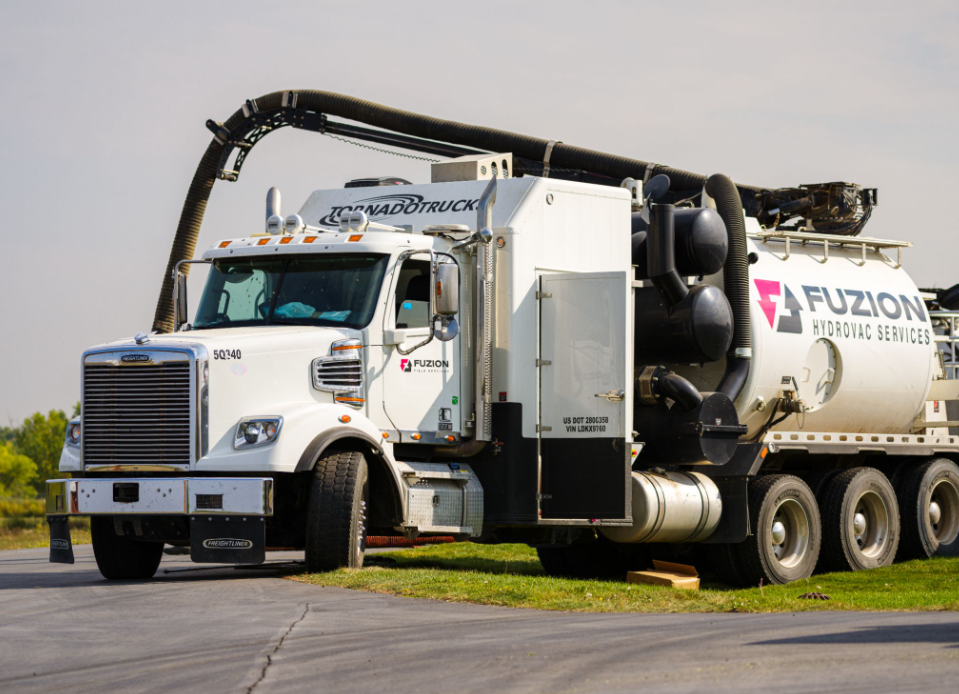
The hydrovac trucks vs dry vacuum trucks comparison depends on ground conditions, spoil handling, and access. A dry vacuum truck can replace a hydrovac on some construction sites, but only when the soil, spoil-handling requirements, and equipment configuration are suited to dry excavation.
Choose a Hydrovac Truck If…
- You are working in frozen, compacted, rocky, or difficult soil.
- You need precision around utilities or other common hydrovac applications.
- The site can accommodate water use and slurry handling.
- Immediate reuse of dry spoil is not a priority.
Choose a Dry Vacuum Truck If…
- The material is loose, dry, or previously disturbed.
- Keeping spoil dry for possible backfill matters.
- Water use or slurry disposal would complicate the job.
- Dust can be controlled safely.
- The available dry vacuum excavation equipment can loosen the material on site.
Choose the Right Truck for Your Job and Maximize Your Chances of Success
Both hydrovac trucks and dry vacuum trucks have unique advantages and limitations that make them suitable for different projects. When deciding which direction to go, consult an industry expert who can provide valuable insights and recommendations. The right choice can make all the difference in the success of your project.
Fuzion provides hydrovac services across Colorado for excavation and utility-related work. Our team can assess your job, recommend the right equipment, and help you request services online. Contact us today for more information.
Frequently Asked Questions
For a hydrovac vs vacuum truck decision, the questions below cover the main field tradeoffs.
What Is the Difference Between a Hydrovac Truck and a Dry Vacuum Truck?
When comparing hydrovac trucks vs dry vacuum trucks, the key difference is how the soil is loosened and removed. A hydrovac uses pressurized water and vacuum, while dry vacuum excavation works without water as the primary excavation medium; some systems use compressed air or air-assisted tools.
Which Excavation Truck Is Better for Frozen Ground?
When comparing hydrovac trucks vs dry vacuum trucks on frozen ground, a hydrovac generally has the advantage when equipped with heated water. Dry vacuum equipment is less suitable unless it can loosen the frozen material effectively.
Can a Dry Vacuum Truck Replace a Hydrovac on a Construction Site?
Sometimes. Dry vacuum excavation can work well in loose, dry, or previously disturbed soil, but compacted, rocky, or frozen ground may still favor hydrovac excavation.
Which Truck Is Faster for Excavation?
Hydrovac excavation trucks can be faster in difficult soil. Dry excavation may shorten the overall job when dry spoil can be reused immediately.
Can Excavated Material From a Dry Vacuum Truck Be Used as Backfill?
Yes, if the material is suitable and meets compaction or utility-cover requirements. Keeping it dry avoids slurry reclamation before reuse.
How Far Can a Hydrovac or Dry Vacuum Truck Operate From the Dig Site?
Both can work remotely through hose runs, but maximum distance varies by equipment and site conditions. Fuzion lists hydrovac utility-daylighting reach of up to 400 feet.
Which Truck Creates Less Mess or Disruption on a Job Site?
For hydrovac trucks vs dry vacuum trucks, neither method is always cleaner. Hydrovac creates slurry but generally produces less airborne dust, while dry vacuum excavation keeps spoil dry but can create airborne dust.