
A project can hit its waste-diversion target and still fail to earn the LEED credit if the required records are missing. At closeout, that can leave the project manager chasing load tickets, facility details, and material totals that should have been tracked from day one. For LEED waste management Colorado projects, the hauler, container plan, and documentation process need to be lined up before the first load leaves the site.
What LEED Waste Management Requires From the Project Team
LEED waste credits depend on a project-specific management plan, consistent tracking, and a final report showing what was generated, diverted, and disposed.
Confirm the Registered Rating System
The registered LEED version controls the diversion thresholds, calculation rules, and documentation requirements. Confirm those requirements before selecting waste streams, assigning containers, or hiring a hauler.
LEED v4.1 and v5 BD+C do not use the same diversion rules. Under the current LEED v4.1 BD+C addenda, the diversion option requires the project to follow its waste-management plan and divert at least 50% of total C&D material from landfill and incineration. Projects registered under earlier addenda may have different requirements. Under LEED v5, one point requires at least 50% diversion with at least 10% of the diverted material salvaged or source-separated for single-material recycling, and two points require at least 75% diversion with at least 25% meeting that condition.
Set the Measurement and Reporting Method
LEED may allow material quantities to be calculated by weight or volume, depending on the applicable rating system. Pick one method and use it consistently across the project.
Local construction-waste rules may apply at the same time. Project teams should account for both sets of obligations when planning construction waste diversion in Colorado. Sorting out those requirements early gives the hauler clear instructions and prevents conflicting records later.
Which Materials Need to Be Diverted and Documented?
LEED does not give every project the same list of materials to recover. The right streams depend on what the work will generate and which recovery options are available near the site.
Choose Material Streams That Can Be Managed
Common candidates include scrap metal, concrete, asphalt, wood, cardboard, gypsum, and reusable building components. Residual debris usually needs a separate disposal path.
Do not put a material in the diversion plan until the team knows where it will go, how it will be measured, and what records the receiving facility or hauler can provide. A stream that cannot be kept clean or documented may create more confusion than usable diversion credit.
Decide What Will Be Separated Onsite
Source separation keeps a defined material stream out of mixed construction debris, usually through a dedicated container. A scrap-metal bin, for example, gives crews a clear place for approved metal and makes that stream easier to track. The approach still has to work on the jobsite. Separate containers require space, signage, access, and cooperation from every trade using the collection area.
Commingled debris may also count when an eligible facility processes the load and provides acceptable documentation. Recycling rates can vary by facility and LEED version, so confirm the allowable rate before including mixed loads in the project total.
Can a Dumpster Rental Company Support a LEED Project?
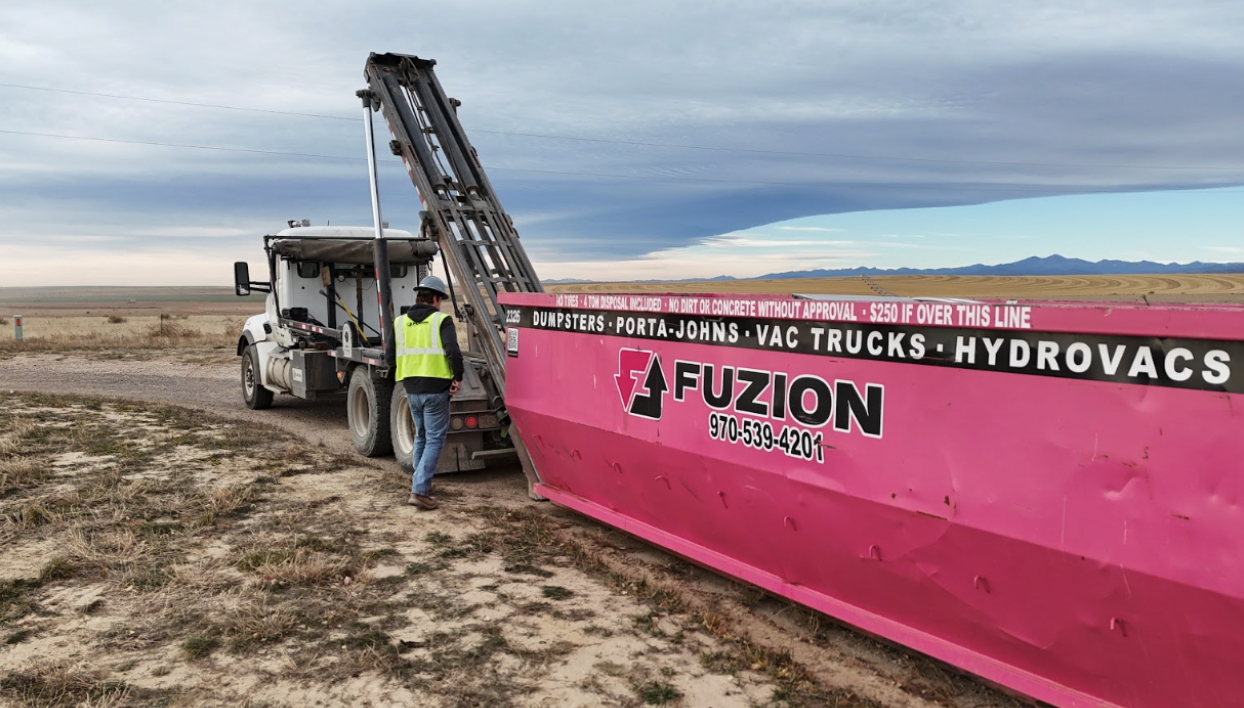
Yes, but the provider’s containers, hauling process, recovery routes, and records must match the project waste-management plan.
Give the Hauler Clear Instructions
A hauler cannot work from assumptions. The provider needs to know which materials will be separated, what can enter each container, where the loads should go, and when pickups are needed.
The project team should also state what each load record must show and how often reports are needed.
Keep the Certification Roles Clear
The contractor remains responsible for jobsite procedures, crew communication, contamination control, and the master project file. The hauler handles the agreed collection, transportation, recovery coordination, and record support.
The hauler can make the waste plan workable in the field, but the project’s LEED administrator or sustainability consultant still owns the credit strategy and formal submittal. No waste provider can guarantee that the project will earn a credit.
How Fuzion Supports LEED Waste Management Colorado Projects
Fuzion can provide commercial roll-offs, dedicated scrap-metal recycling, and related site services for Colorado projects pursuing LEED waste credits.
Match Containers to the Planned Waste Streams
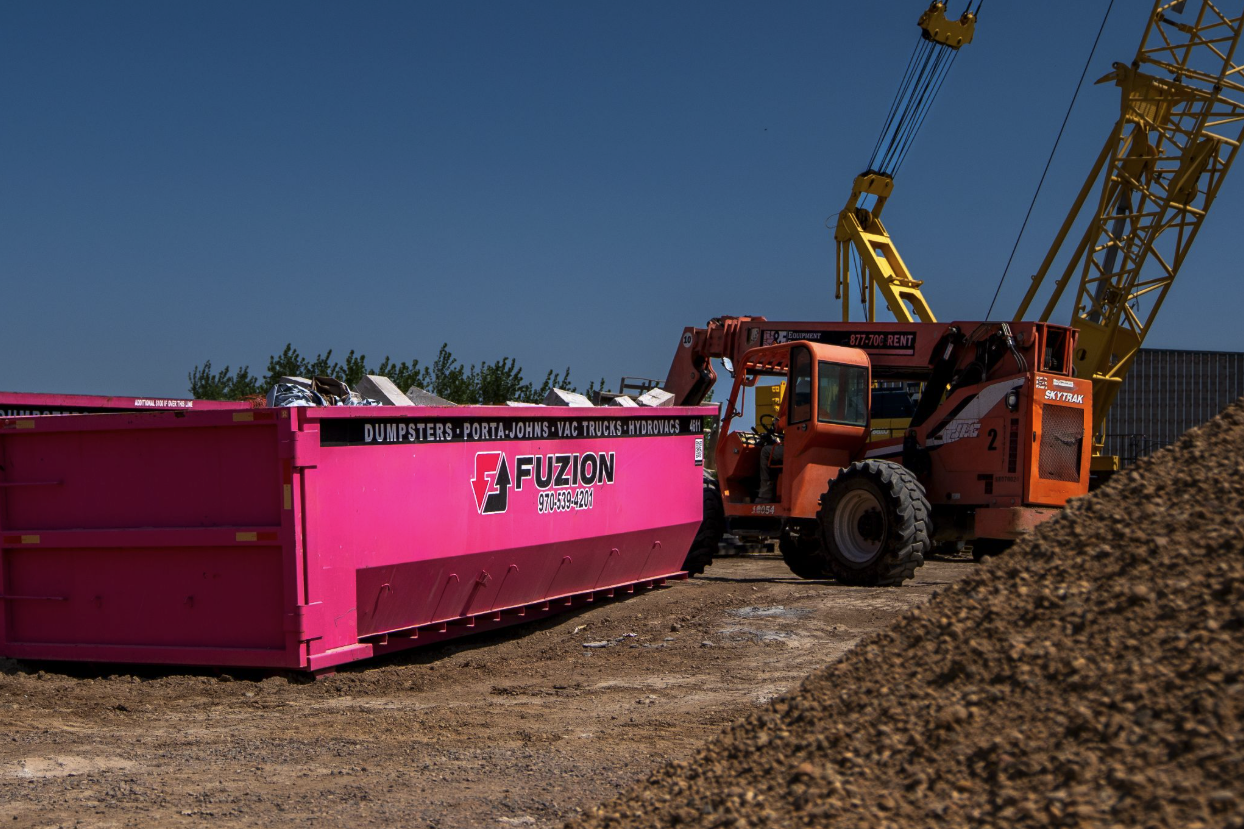
Fuzion offers commercial roll-off dumpsters in several sizes, including covered and uncovered options, with service available across Colorado. The right size depends on the material as much as the volume. Dense concrete or asphalt can reach weight limits before a container is full, which may make a smaller roll-off the better choice. Bulky renovation or construction debris may need a larger container when the site has enough access and loading space.
The point is to build the container plan around the waste-management plan. One project may need a roll-off for residual debris, another for a high-volume recyclable stream, and separate service for specialty materials. Contractors comparing LEED construction dumpster rental options in Colorado should confirm accepted materials, placement, pickup frequency, weight limits, and planned destinations before delivery.
Keep Scrap Metal in Its Own Stream
Scrap metal often works well as a separate recovery stream. Fuzion provides dedicated bins with worksite pickup, hauling, and recycling for approved metals. A dedicated bin helps keep usable metal out of the mixed-debris container. The project team should confirm how the metal quantity and destination will be recorded, keep Fuzion-listed prohibited items out of the bin, and settle any contamination restrictions during setup.
Shared collection areas also need clear instructions. One incorrect load can compromise a stream that crews have kept separate for weeks.
Coordinate Multiple Site Services
Once the collection plan is in place, Fuzion can coordinate dumpsters, scrap-metal recycling, and related commercial site support through one provider. Fewer vendor contacts can make scheduling and site coordination easier for the project manager. Documented diversion gives the project measurable results for its environmental responsibility goals. Those results still depend on field controls and usable records.
For LEED waste management Colorado projects, Denver-area and statewide teams should spell out collection, pickup, and reporting expectations when evaluating a waste hauler.
Set Documentation Requirements Before Hauling Starts
The project team should tell the waste provider what it needs before the first pickup. Waiting until closeout to ask what the tickets contain is too late.
Define the Records the Project Needs
Typical records may include:
- Haul date
- Material category
- Weight or volume
- Receiving destination
- Recovery or disposal status
- Running project totals
Together, those records need to support the final material totals and the reported diversion and disposal rates. The exact fields should follow the registered rating system and the project waste-management plan.
The written service agreement should identify which fields Fuzion can provide and whether the records will use weight or volume. It should also cover report format, delivery frequency, the receiving-facility details available, and whether Fuzion will provide a project-end summary. That prevents the project team from assuming a record is included when it is not.
Check the Records During the Job
Review the paperwork throughout the job. Regular checks can catch inconsistent units, missing facility information, destination changes, or contamination problems before they spread across dozens of loads. A sound LEED waste management Colorado process builds the closeout file as the work proceeds. A team already mid-project should review the tickets it has, identify what is missing, and tighten the process for the remaining loads.
The waste plan must also separate ordinary C&D debris from hazardous, regulated, or otherwise prohibited waste. Those materials may need testing, separate containers, specialized transportation, and approved disposal. Keep their records separate from the documents used to calculate nonhazardous C&D diversion.
What to Confirm Before the First Container Arrives
Before service begins, the contractor, LEED administrator or sustainability consultant, and waste provider should agree on:
- The registered LEED version and rating system
- The project’s diversion path and target
- The material streams expected onsite
- Which materials will be source-separated or commingled
- Container sizes, locations, and access needs
- Accepted and prohibited materials for each container
- Planned recovery and disposal destinations
- Whether quantities will be measured by weight or volume
- Required ticket, receipt, and report fields
- Report format and delivery schedule
- The person maintaining the master project file
- Procedures for hazardous, restricted, or unusual materials
These decisions give crews and service providers clear instructions for carrying out LEED waste management Colorado requirements in the field. They also give the project team a consistent set of questions for comparing waste vendors before awarding the work.
Coordinate Your Project’s Waste Plan With Fuzion Early
Contact Fuzion before submitting the waste-management plan or finalizing the container layout and reporting process. Early coordination can help match dumpster sizes, scrap-metal service, pickup schedules, and available documentation to the project plan. Contact us today for more information.