
Most project teams accept a hauler’s diversion report without rebuilding the number from the records behind it. That decision can affect LEED points, owner reporting, ESG data, and closeout when the reported percentage cannot be supported. A practical process to verify construction waste diversion claims starts with the project’s actual loads, measured weights, receiving facilities, and the method used to calculate diversion.
Why a Reported Diversion Rate May Not Hold Up
An October 2025 Multnomah County investigation reviewed waste reporting on four library construction projects where a hauler claimed an 83% recycling rate for commingled material. The material breakdowns lacked actual component weights, and the hauler acknowledged relying on visual estimates.
The county recalculated the projects using a 16.6% facility rate established by the regional authority, reducing the diversion results and anticipated LEED points. Even a professional-looking report can fall apart under review when the team cannot trace the percentage to defensible records.
The example raises a question many project teams are already asking: “Are waste hauler recycling claims accurate?” The percentage is only as reliable as the records and calculation behind it.
How to Verify Construction Waste Diversion Claims
The question “Can I trust my hauler’s diversion report?” starts with traceability. A diversion rate is supportable when the project team can connect the reported quantities to identifiable loads and reproduce the calculation.
Match Each Pickup to Project Records
To verify construction waste diversion claims, begin with the project’s hauling log or invoices. Match each pickup to a ticket number, service date, truck or container identifier, measured weight, and named receiving facility.
A single load should leave one consistent trail. The haul record shows the service date, the scale ticket records the measured load, and the receiving facility confirms delivery. The monthly report should carry that load into the project totals without unexplained changes.
Check the Ticket Math
The ticket math should be easy to check. Gross weight is the loaded truck or container, tare weight is the empty truck or container, and net weight is the material being reported. Subtracting the tare weight from the gross weight should produce the stated net weight.
Confirm the Receiving Facility and Processing Method
The question “How do I know if my waste hauler is actually recycling?” cannot be answered by a pickup ticket alone. Pickup records confirm collection, and a weight ticket may establish that 6.4 tons reached a facility. Evidence of recycling still requires a named receiving facility and documentation showing the processing method or verified diversion rate applied to that load under the project’s LEED version or other reporting requirement.
Those evidence requirements should be written into the construction and demolition waste management plan before hauling begins. The plan should identify material streams, receiving facilities, reporting frequency, and the calculation method. The team can then check every monthly report against the requirements established at the start.
Waste Diversion Documentation: Construction Records to Require
Project teams asking, “What documentation do I need to verify diversion?” need records that connect individual pickups to the totals and percentages shown in the diversion report. Reliable waste diversion documentation for construction projects should allow the team to follow every load from the jobsite to its reported outcome.
Check Weight Tickets and Report Totals
The documentation should let the team follow every pickup from its measured weight to the named destination, material classification, and reported outcome. A useful weight ticket should include a ticket number, date and time, project or account identifier, truck or container number, facility name, material description, gross weight, tare weight, and net weight. The record must contain enough information to match the load to the project.
Monthly and final reports should show tonnage by material stream, with commingled material, disposal, and residue identified separately where applicable. The package also needs hauling records, facility identification, the source of any facility-wide rate, diverted totals, and the final calculation. All totals should reconcile with the tickets.
Reproduce the Reported Percentage
Knowing how to verify recycling reports means checking the calculation as carefully as the supporting tickets. Add the project’s measured loads, separate disposed material from diverted material, identify the rate applied to commingled waste, and reproduce the reported percentage. Any difference between the supporting records and the report should be resolved before the number enters a LEED, owner, or ESG submittal.
Once the project totals are reconciled, calculate the diversion percentage by dividing eligible diverted material by total generated C&D waste and multiplying the result by 100. The applicable LEED version may change which materials, exclusions, and mixed-load facility rates can be used in that calculation. Reproducing the percentage also requires identifying what type of diversion rate the hauler applied.
Project-Specific Records and Facility Rates
Project records establish what left the jobsite, and facility rates determine how qualifying mixed material is counted.
| Reporting Element | What It Describes | Where the Number Comes From | Main Verification Question |
|---|---|---|---|
| Project-specific load records | Actual pickups and measured quantities attributed to the project | Tickets, invoices, haul logs, and facility receipts | Can each load be traced to this project? |
| Project-specific sorting results | Material quantities measured from the project’s commingled waste | Individual component weights after sorting | Were the material streams measured using an acceptable method? |
| Facility-wide diversion rate | The processing facility’s broader recovery performance | Facility calculations, authority-established rates, or third-party verification | Who established the rate, and may this project use it? |
Project Records and Facility Rates in the Same Calculation
Project-specific load records and diversion rates are separate parts of the calculation. A hauler may tie tickets to the project and apply a broader facility average to commingled material. That facility rate does not replace records showing how much material the jobsite delivered.
The project team must verify construction waste diversion claims at both levels. The tickets establish the project’s tonnage, and the approved rate determines how much qualifying mixed material may count as diverted.
LEED v4 and v4.1 Rules for Commingled Waste
Knowing how to verify diversion rates for LEED starts with the project’s registered rating-system version. LEED v4 guidance allows either a project-specific diversion percentage based on measured component weights or a facility average regulated by the appropriate local or state authority. Visual estimates are not acceptable for the project-specific method.
LEED v4.1 BD+C includes additional paths for commingled recycling facilities with independently certified rates. Confirm the project’s exact credit path before applying a facility rate.
LEED v5 Rules for Facility Rates
LEED v5 uses a different framework for mixed C&D material sent to a processing facility. The facility’s average recycling rate is used, and an average without third-party verification cannot be counted above 35% for the credit calculation.
A third-party verified facility rate is acceptable when the project’s registered LEED version and applicable credit permit its use. Confirm the rate’s source and verification status before applying it to the project’s mixed material.
Source-Separated Streams Can Be Easier to Trace
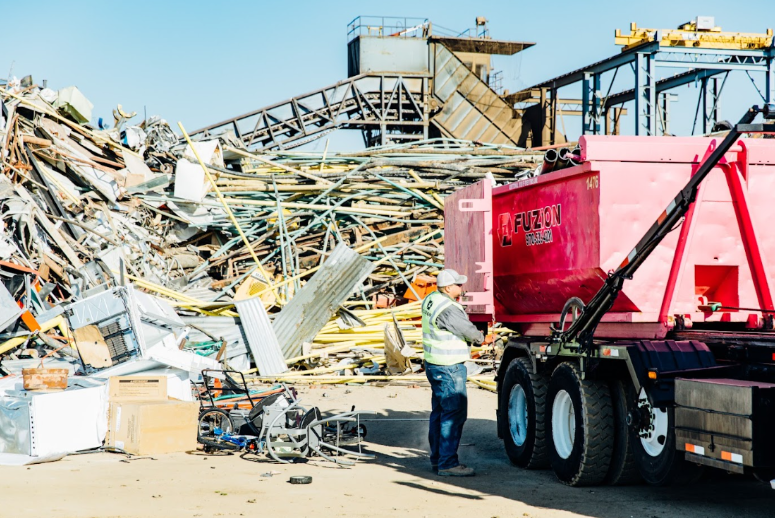
For example, source-separated scrap metal can be collected, weighed, and reported independently from mixed debris. That separation gives the team a cleaner record of what left the site and where it went. The project team can then reconcile that stream against its own pickup and weight records.
Weight-Ticket and Reporting Red Flags
Some discrepancies deserve immediate follow-up. Missing facility names, ticket dates that do not match pickups, and unidentified project loads all require clarification. Repeated identical weights, unexplained round-number material splits, and totals that do not equal the supporting tickets also deserve review. A discrepancy is a reason to investigate, not automatic proof that the hauler acted dishonestly.
Receiving Facility Changes
Moving loads to a different receiving facility may affect the diversion percentage the project can claim. A rate established for the original processor may no longer apply. The hauler should notify the project team when destinations change and document the new reporting method.
Review Reports Monthly
Reviewing each report monthly helps the team verify construction waste diversion claims and catch routing, ticket, or calculation problems before closeout. Regular reconciliation gives the team time to request missing tickets, correct project identifiers, or question a rate before the same problem spreads across months of reporting.
What to Do When Incorrect Data Has Already Been Submitted
If incorrect data has already been submitted for LEED, identify the affected loads, stop relying on the unsupported figures, and recalculate the result using defensible records or an acceptable alternative method. The LEED project administrator or consultant can update the documentation and explain the correction through the applicable review stage. A clarification response or supplemental review may provide a correction path, but the revised calculation may change the expected point result.
Correct any owner report that used the questionable number, and make the same correction in ESG reporting. LEED documentation and ESG reporting are not identical systems, but both depend on records that can withstand review.
Questions to Ask Before the First Load Leaves
The easiest time to prevent a documentation problem is before the first container leaves the site. The hauling scope, kickoff meeting, or waste management plan should answer these questions:
- Will every pickup receive a weight or scale ticket tied to this project?
- Which facilities will receive each waste stream, and will the team be notified before a destination changes?
- Will the material be source-separated or commingled?
- Is the reported rate project-specific or facility-wide, and who established or verified it?
- How frequently will reports be delivered, and how quickly will missing or corrected records be supplied?
- How will contaminated or rejected loads be reported?
- Which project, account, truck, or container identifiers must appear on the supporting records?
Container selection should follow the waste-stream plan. Coordinating commercial dumpster rentals with the expected materials can reduce contamination and make the documentation easier to organize. It also gives the hauler and project team a common reporting structure from day one.
Construction Waste Diversion Documentation: Colorado Requirements

Requirements for construction waste diversion documentation in Colorado vary by jurisdiction. The records must account for the contract, registered LEED version, receiving facilities, and local rules at the project site. Municipal obligations should be confirmed separately from the LEED calculation.
For teams managing LEED waste verification in Colorado, a sustainable waste management in Colorado strategy works best when local requirements and project reporting are established together.
Consistent records make it easier to verify construction waste diversion claims throughout the project and resolve gaps before closeout.
Establish Project-Specific Waste Reporting With Fuzion
Fuzion helps construction teams establish containers, waste streams, and project-specific documentation before hauling begins. That early coordination gives project managers and sustainability leads a clearer record for LEED or ESG reporting. Contact us today for more information.