
Every waste manager wants predictable operations. In 2026, regulations and reporting systems will tighten across packaging, organics, and high-risk materials. Teams that plan for those changes now, by improving documentation, training, and data collection, will move through inspections and audits with fewer delays and less rework.
1. Extended Producer Responsibility (EPR) Hits the Route Sheet in 2026
Packaging Extended Producer Responsibility (EPR) programs stop being a headline and start shaping day-to-day operations in 2026. In Colorado, producers must pay annual dues to the Producer Responsibility Organization (PRO) by January 1, 2026, with records sufficient to document compliance, meaning SKUs, weights, and materials tracking move from “nice to have” into regulated reporting.
In Oregon, fee structures and exemptions are already active, and the next private-recycling exemption window (for the 2027 fee year) is likely to run January through April 2026, contract managers should align internal data capture accordingly. Meanwhile, Maryland and Washington require producers to join an approved PRO by July 1, 2026, expanding the playbook across more jurisdictions.
Operational priorities for 2026
- Align container labels and invoices with accepted materials lists and fee categories by jurisdiction. Build a single label-to-invoice map so the same SKU logic appears at the dock, on the ticket, and in quarterly exports.
- Capture consistent data fields, product category, material type, packaging weight, jurisdiction code, contamination flags, and fee class, to reduce reconciliation effort as PRO invoicing ramps state-by-state.
- Add contract language requiring quarterly CSV/XML exports, documented Application Programming Interface (API) access, and version control whenever accepted materials or fees update.
- Assign data ownership and schedule quarterly cross-checks among purchasing, vendors, and accounts payable to prevent fee leakage.
California’s Senate Bill 54 (SB 54) rulemaking continues, and Circular Action Alliance (CAA) is the state’s approved PRO; producer registration opened in August 2025, with program guidance evolving into 2026. Several states are also reviewing chemical and advanced recycling methods to handle hard-to-recycle plastics within future EPR frameworks.
2. PFAS, Batteries, and Other “Risky Streams” Tighten Safety and Documentation
The U.S. Environmental Protection Agency has now listed Per- and Polyfluoroalkyl Substances (PFAS), specifically PFOA and PFOS, as hazardous under the Comprehensive Environmental Response, Compensation, and Liability Act (CERCLA), effective July 8, 2024. That change increases reporting obligations and potential liability for releases. Landfills and wastewater utilities are flagged as “passive receivers,” meaning programs must document how incoming streams are handled and how incidents are logged.
At the same time, lithium-ion batteries continue to drive facility fires. Publicly reported incidents at Materials Recovery Facilities (MRFs) and transfer stations rose roughly 20 percent in 2024 and remain high through 2025, pushing battery screening and isolation procedures onto 2026 collection and transfer standard operating procedures (SOPs).
Operational priorities for 2026
- Add battery and hazardous-indicator screening during collection, especially for bulky or construction waste.
- Require incident log templates (timestamp, route, asset ID, photo) and define isolation protocols for suspect loads.
- Include contamination thresholds and charge-through fees for emergency response within contracts, plus monthly incident summaries with photos and corrective actions.
- Schedule quarterly training for drivers, property staff, and generator contacts aligned with seasonal risk periods.
- Keep Safety Data Sheets (SDS) accessible on every route vehicle or at each facility where hazardous or PFAS-containing materials might appear.
Together these controls turn compliance into prevention, reducing risk, protecting crews, and keeping every documented load defensible under 2026 regulations.
3. Organics Programs Shift from Rollout to Verification and Enforcement
“Set out a green bin” was the focus in 2024–2025; proving contamination control is the focus in 2026. New York City (NYC) expanded organics collection citywide in 2025 but paused most small-building fines to build awareness, leaving enforcement to expand in 2026. California’s Senate Bill 1383 (SB 1383) already mandates contamination controls: jurisdictions must conduct route reviews, keep detailed records, and maintain annual reports showing inspections and corrective actions.
Operational priorities for 2026
- Require photo evidence tied to route or stop ID when contamination is found, with automated generator notices stored to account files.
- Add a Contamination Control Exhibit in contracts specifying thresholds, education steps, and charge-throughs for repeat offenders.
Hold quarterly toolbox talks for staff on accepted materials and secure-lid practices; align notices with jurisdiction templates.
These verification steps turn organics programs from simple collection schedules into measurable compliance systems, documented, accountable, and ready for full enforcement in 2026.
4. Artificial Intelligence (AI) and Internet of Things (IoT) Move Upstream into Collection
Camera-based contamination detection and sensor-equipped containers are becoming standard. Artificial Intelligence (AI) image scoring of contamination and on-route alerts have shown measurable reductions in pilots, such as the Recycling Partnership’s AI mailer program, and vendors now provide standardized, Application Programming Interface (API)-ready data fields (stop ID, fullness percent, contamination score, GPS, and timestamp).
Municipal pilots show measurable contamination reductions and service optimization as data feeds directly into performance dashboards.
Operational priorities for 2026
- Specify in RFPs a weekly data export or API feed containing stop ID, fullness percent, contamination score, image URL, GPS coordinates, and timestamp. Define a retention window of at least 24 months for audits.
- Establish auto-notification rules that flag contamination scores above threshold and schedule follow-up inspections.
- Ensure field data travels with the load ticket to the MRF to reconcile residue rates and charge-backs.
Expect broader efforts to standardize diversion and contamination data fields so recycling metrics remain consistent across platforms and reporting systems.
5. Localized Processing and Take-Back Logistics Expand
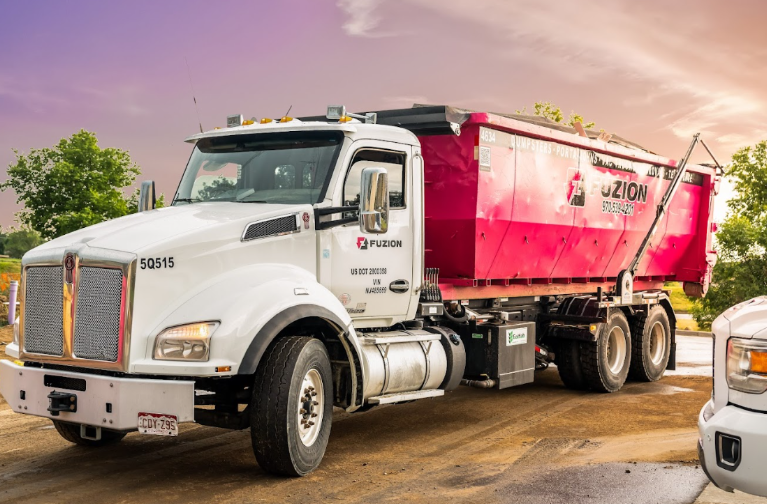
With growing transport costs and tighter reporting chains, many 2026 procurements will favor short-haul, localized processing and original-equipment-manufacturer (OEM) take-back programs. Shorter routes cut emissions and simplify documentation, while take-back models improve traceability for e-waste, textiles, and packaging.
Together, these regional processing and take-back models support the circular-economy goal of keeping materials in use rather than discarding them.
Operational priorities for 2026
- Evaluate regional recyclers within a defined radius to cut haul emissions and improve responsiveness.
- Ask vendors to list downstream partners and chain-of-custody documentation in bids.
- Track collection-to-processing distance and keep facility documentation inside each project’s Construction & Demolition Waste Management Plan and reports to support LEED v4.1 Materials and Resources credit documentation and municipal filings.
These localized and take-back strategies close the loop on material handling, reducing haul distance, tightening documentation, and giving every diversion report a verified chain of custody.
Q1–Q2 2026 Preparation Checklist: Putting These Five Trends into Action
The following checklist translates each 2026 trend into specific early-year actions your team can schedule now to stay compliant and audit-ready.
EPR Packaging – Confirm producer registration, map SKUs to materials and weights, and require quarterly data exports or API integration. Colorado dues start Jan 1 2026; Washington and Maryland join PROs by Jul 1 2026.
Textiles (California Senate Bill 707 – SB 707) – Note PRO application Jan 1, approval Mar 1, producer join Jul 1 2026. Reserve contract clauses for take-back handling and data fields by brand or SKU.
Organics – Implement route-review documentation (inspector, findings, photos) and standardize contamination thresholds.
AI/IoT – Pilot sensors or cameras at one or two facilities, verifying image storage and contamination scoring before scaling.
Safety – Require monthly incident summaries for battery-related events and keep PFAS/CERCLA communications and sampling logs consolidated by site.
Completing these early-year actions sets a foundation for consistent reporting, smoother audits, and full operational readiness before the next wave of 2026 regulations takes effect.
Stay Ahead of 2026 Waste and Recycling Requirements with Fuzion
Fuzion’s field teams document, track, and report every stream according to the latest EPR, PFAS, and organics standards. We can help keep your 2026 audits clean and your diversion goals verifiable. Contact us today for more information.