
Demo debris adds up fast. Knowing how to choose the right dumpster size starts with the rooms you are gutting. A bathroom gut-out creates a very different waste stream than a kitchen renovation or whole-home remodel, so both debris volume and weight shape the best dumpster choice.
How to Choose the Right Dumpster Size by Remodel Scope
Choosing by room keeps the estimate tied to the actual debris stream instead of a vague volume guess. Common roll-off dumpster sizes help frame the likely range, but the remodel itself should drive the decision.
Bathroom Remodels Usually Need Less Space but More Weight Capacity
For bathroom projects, how to choose the right dumpster size usually comes down to weight more than bulk. A small bathroom usually produces dense debris rather than towering debris. Tile, mortar, old fixtures, and sections of drywall add weight quickly.
For a straightforward bathroom remodel, a 10-yard dumpster often works well. If the project includes a tub, double vanity, tile walls, or flooring from an adjoining powder room, moving up to a 15-yard container can give you needed breathing room. The space may still look manageable at first. The weight often tells a different story.
Kitchen Remodels Fill a Dumpster Faster Than Most Homeowners Expect
Kitchens create a different sizing problem because the debris is bulkier from the start. Cabinets, countertops, drywall, sink bases, shelving, flooring, appliance packaging, and trim create a lot of awkward pieces that do not stack neatly. They eat up space fast.
A 20-yard bin is often a practical fit for kitchen renovations, especially when the project includes both demolition waste and replacement-material packaging arriving at the same time. If your kitchen project is more of a cosmetic refresh with limited tear-out, you may stay smaller. A full gut with flooring, cabinets, and wall changes usually calls for moving up in dumpster size.
Basement Overhauls Often Combine Demo Debris With Old Stored Junk
Basement work can be harder to size because homeowners often combine renovation debris with old stored junk. That mix often pushes the project toward a 15-yard or 20-yard dumpster. Old shelving, damaged furniture, boxes, carpet, trim, and drywall can stack up before the actual remodel debris is even finished.
If the basement is mostly a cleanout with light materials, a 15-yard container may cover it. If the work includes framing changes, drywall removal, flooring tear-out, or a long cleanout list, a 20-yard dumpster is the safer bet. Basement projects can grow faster than they look on day one.
Whole-Home Remodels Create Overlapping Waste Streams
Once the remodel spreads beyond one contained space, the sizing decision changes again. How to choose the right dumpster size turns from a room-by-room estimate into a pacing decision for the whole project. Debris starts hitting the container in waves.
Full-home renovations generate overlapping waste streams from several rooms at once. Cabinets may come out in one area while carpet, trim, drywall, doors, old furniture, and packaging start piling up elsewhere. For work on that scale, 30-yard dumpsters are commonly used because they can handle larger renovations and keep the project from stalling while debris piles up.
Some homeowners land in a middle range when the project is larger than a kitchen remodel but smaller than a full gut. In those cases, the choice usually comes down to:
- project scope and debris load
- how many rooms will be generating debris at the same time
- whether the remodel is producing mostly bulky debris, dense debris, or both
What looks oversized at first can be the safer choice once several rooms are producing debris at the same time.
Estimate Debris Room by Room Before You Order
Room-by-room estimating turns the remodel into a counting exercise instead of a rough visual guess. Start with the built-ins and finishes you know are leaving the house, then sort the debris into a few practical categories.
- Bulky items: cabinets, shelving, countertops, trim bundles, packaging, and other pieces that eat up space quickly
- Dense materials: tile, mortar, brick, concrete, and other heavy debris that can push the order toward its weight limit
- General cleanup: cardboard, wrap, broken pallets, torn-out scraps, and mixed debris that tends to collect during installation
This step helps you see whether the project is likely to fill the dumpster by volume or hit the container’s weight limit first. Heavy materials can trigger overage fees before a dumpster even looks full. That is where things get expensive.
Each container has a weight limit, and dense debris such as tile, bricks, broken concrete, or similar materials can hit those limits quickly. A smaller container can sometimes be the right choice for heavy debris. A larger container often makes more sense for lighter but bulkier demolition like cabinets, wood trim, or packaging.
The Real Cost of Choosing the Wrong Dumpster Size
The real cost mistake is not always ordering too small. Two sizing mistakes can cost homeowners money:
- Undersizing: the dumpster fills too fast, which can force a second haul or an exchange and slow down the remodel
- Oversizing: you pay for capacity you never use, which still wastes money on a budget-sensitive home project
Either way, a bad estimate costs money. Timing can change the math fast. If your remodel will generate debris in one intense burst, the container needs to absorb that surge. If the project is phased, a smaller dumpster with a scheduled swap may be more cost-effective than a single oversized bin sitting half empty for days.
That is where swaps and rental timing can affect the final cost. A well-timed exchange can keep the project moving while reducing the chance that you pay for more container space than the remodel really needs.
What Can and Can’t Go in a Residential Dumpster Rental
A residential dumpster rental usually accepts common remodel debris, but restrictions are often the part that surprises homeowners.
- Commonly accepted debris: drywall, lumber, trim, shingles, tile, yard waste, cardboard, and ordinary household clutter
- Commonly restricted items: paint, solvents, motor oil, propane tanks, batteries, many electronics, asbestos-containing materials, and some appliances that use refrigerants
If an item contains chemicals, compressed gas, or hazardous components, assume it needs confirmation before it goes in the bin. That extra check matters before demo starts, not after the driveway is already full. A restricted item can slow down the cleanup plan fast.
Appliances are often where that restriction issue becomes real. It is easy to assume an old stove, dishwasher, or washing machine can go in with the rest of the debris, then make the same assumption about a refrigerator, freezer, or window air conditioner. That is a common snag.
Units that contain refrigerants or certain electronic components may need separate disposal. It is worth confirming those rules before delivery day instead of finding out at the last minute that the biggest item in the garage cannot go in the dumpster.
Placement, Driveway Access, and Permit Considerations
Placement affects size choice more than most homeowners expect. A bigger dumpster only helps if there is enough room to place it safely and enough clearance for the truck to drop it and remove it later. Location matters before the dumpster ever arrives.
Before delivery day, check the site for:
- a solid, flat surface for placement
- enough clearance for drop-off and pickup
- possible street-permit requirements
- HOA rules or neighborhood restrictions
- general site conditions that could limit where the container can go
That is why permit checks and delivery prep should happen early. If driveway space is limited, a slightly smaller container or a swap strategy may be smarter than forcing a large bin into a difficult location. The best size still has to fit the property.
Once the location is chosen, the next concern is protecting pavement and keeping day-of-use access open. Homeowners should think about where the wheels will sit, how close the bin will be to garage access, and whether parked cars or low branches could block loading or pickup. Close is convenient. Clear access matters more.
If you are still unsure how to choose the right dumpster size, size the order around the bulkiest or heaviest part of the remodel, not the smallest part. A few boxes of packaging do not determine the size. The heaviest flooring, bulkiest cabinets, longest drywall pieces, or biggest cleanout piles do. That rule of thumb gives you a more realistic estimate and reduces the odds of paying for another haul or ordering more space than the project will use.
Choose Fuzion for Residential Dumpster Rentals That Fit Your Remodel
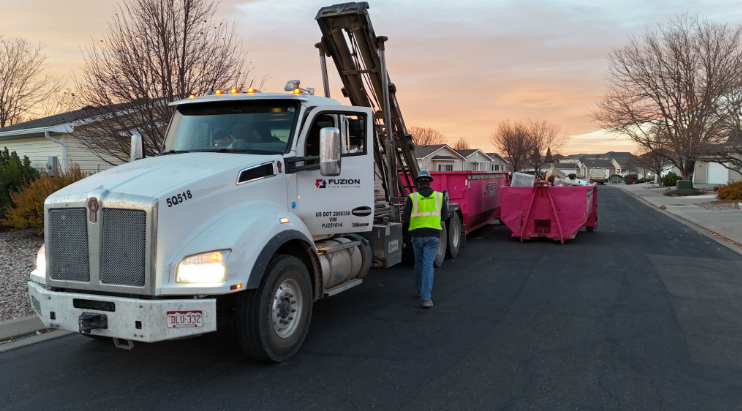
The right dumpster keeps a remodel cleaner, easier to manage, and less likely to stall because debris is piling up in the wrong place. Choosing the right size from the start helps you avoid wasted space, extra haul costs, and delivery headaches. Contact us today for more information.
Frequently Asked Questions
Is a 10-yard dumpster enough for a bathroom remodel?
A 10-yard dumpster often works for a straightforward bathroom remodel, but a 15-yard container can make more sense if the project includes a tub, tile walls, or debris from an adjoining room.
What size dumpster is usually best for a kitchen remodel?
A kitchen remodel often fits best in a 20-yard dumpster because cabinets, countertops, flooring, drywall, and packaging can fill a container quickly.
Do I need a permit for a residential dumpster rental?
You may need a permit if the dumpster will sit on a public street, while driveway placement is more likely to avoid that requirement depending on local rules.
Can I throw paint or other chemicals into the dumpster?
Usually no, because paint, oils, batteries, propane tanks, and similar hazardous materials often require separate disposal.
Can appliances go into a remodel dumpster?
Some appliances can, but refrigerators, freezers, and air conditioners often need separate handling because refrigerants and other regulated components may have to be removed first.