
Hydro excavation removes material from around buried infrastructure, while hydro jetting is used inside pipes and lines to clear buildup or obstructions. Both use pressurized water, but the work happens in two very different places. Understanding hydro excavation vs hydro jetting makes it easier to choose the right service before work begins.
| Comparison Point | Hydro Excavation | Hydro Jetting |
|---|---|---|
| Purpose | Creates controlled access by removing soil or similar material around buried infrastructure | Cleans the inside of a pipe, drain, sewer, or similar line |
| How It Works | A hydrovac recovers loosened material into its debris tank after water is applied to the excavation area | Water is delivered through a hose and nozzle to dislodge buildup, debris, and blockages inside a line |
| Equipment | Hydrovac or vacuum-excavation equipment with water and debris-recovery systems | Jetting equipment built around a hose, nozzle, and water-delivery system; some configurations may also use vacuum capability |
| Typical Jobs | Daylighting, potholing, utility exposure, trenching, and precision digging near existing infrastructure | Sewer and drain cleaning, removal of grease or sediment, line maintenance, and clearing internal blockages |
| What It Can’t Do | Hydro excavation does not jet-clean the inside of a pipe. | Hydro jetting does not excavate surrounding soil to expose buried utilities. |
The difference between hydro excavation and hydro jetting is where the work takes place. Hydro excavation works outside the pipe or utility, while hydro jetting works inside the line.
When Hydro Excavation Is the Right Service
Hydro excavation is used when crews need to expose or work around something below grade. Crews use the hydrovac to create a controlled opening around the target area. As water frees the surrounding material, the truck recovers it into the debris tank, reducing the amount of mechanical digging needed near buried infrastructure.
Fuzion’s hydro excavation services are used for utility daylighting, potholing, narrow trenching, and excavation around existing lines. These applications are often grouped under non-destructive digging because the excavation method gives crews more control around known or suspected underground infrastructure.
Typical hydro excavation jobs include:
- Utility locating and daylighting: exposing a buried line so crews can confirm where it is and how deep it runs.
- Potholing: opening a small area to inspect or access underground utilities.
- Trenching: removing material along a controlled path for installation, repair, or access work.
- Precision excavation near existing infrastructure: creating working room where conventional digging equipment may be too disruptive.
- Selected material-recovery or cleanup work: using vacuum recovery where the material and site conditions make that approach appropriate.
The phrase hydro excavation vs hydrovac can be confusing because hydrovac commonly refers to the excavation method or the equipment used to perform it. Dry vacuum equipment removes loose material without pressurized water. Hydrovac trucks combine pressurized water with vacuum recovery to loosen and remove material.
When Hydro Jetting Is the Right Service
Hydro jetting is the better fit when the problem is inside a pipe rather than in the soil around it. A jetting hose and nozzle system sends water through the line to break loose buildup, debris, and certain obstructions so the line can be cleared.
Typical hydro jetting jobs include:
- Sewer and drain cleaning: clearing blockages and accumulated material inside the line.
- Municipal line maintenance: removing sediment, debris, grease, and similar buildup from sewer or stormwater systems.
- Commercial and industrial pipe cleaning: cleaning lines where internal buildup is restricting flow.
Hydro excavation vs hydro jetting comes down to whether the job requires access around the line or cleaning inside it.
Hydro Excavation vs Hydro Jetting: Which Service Fits the Job?
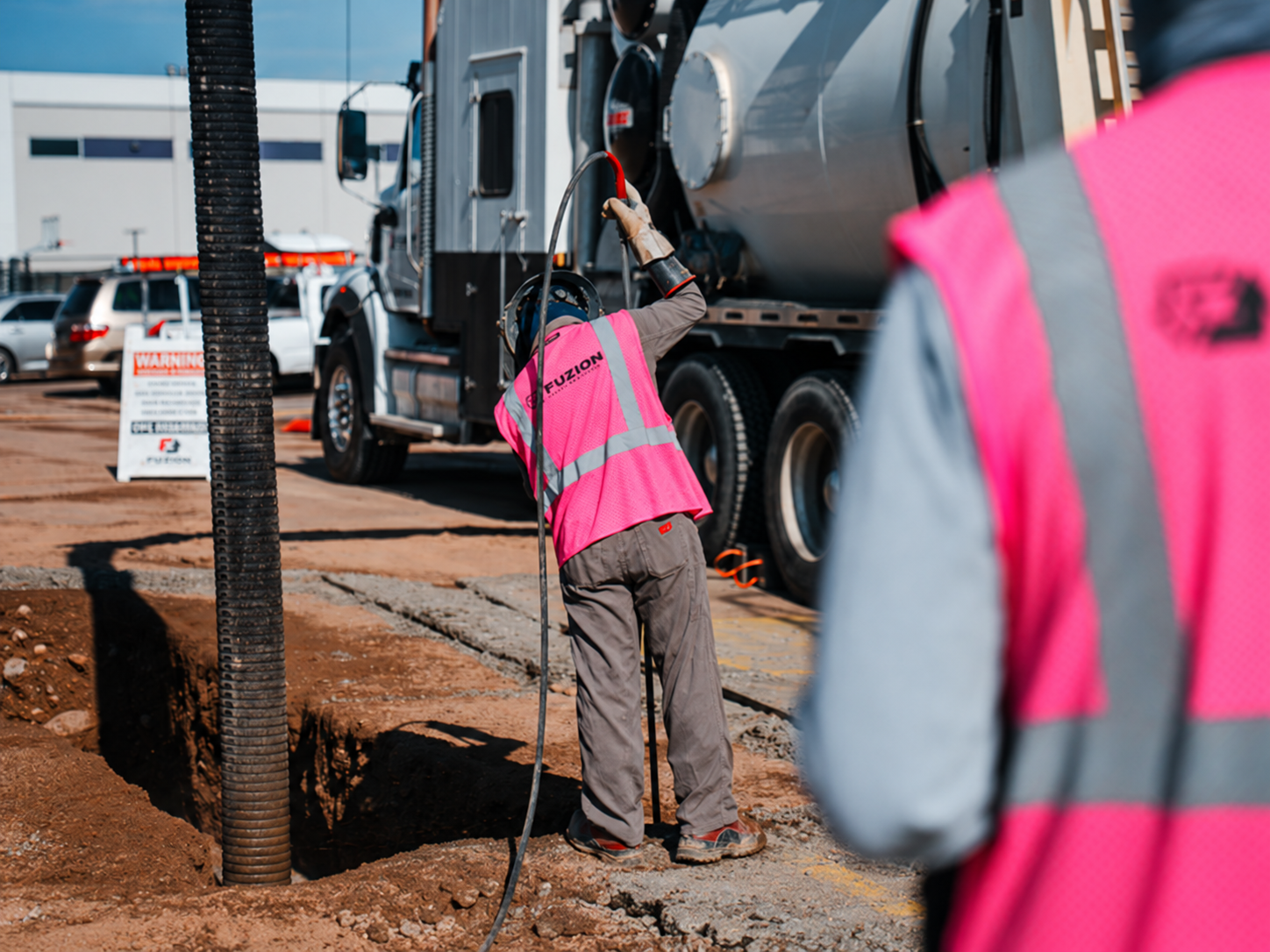
To determine when to use hydro jetting vs hydro excavation, identify what must be removed and whether it is inside or outside the line.
- Digging around a buried utility line → Hydro excavation. The goal is to remove soil and expose the utility.
- Potholing or daylighting → Hydro excavation. The work requires a controlled opening from the surface to the buried asset.
- Clearing a clogged sewer or drain line → Hydro jetting. The obstruction is inside the pipe.
- Removing grease, sediment, or other buildup from a line → Hydro jetting. The work is internal cleaning rather than excavation.
- Exposing a buried line and then cleaning it → Both services, same Fuzion crew. Hydro excavation can provide access, followed by hydro jetting to address the condition inside the pipe.
- Cleaning up a spill → Environmental spill cleanup. Fuzion uses vacuum-based equipment for spill recovery, with the cleanup method determined by the material and site conditions.
Choosing hydro excavation vs hydro jetting starts with the type of work the project requires.
Can the Same Crew or Equipment Handle Both?
The services are separate even when some equipment shares water or vacuum capabilities. Equipment varies with the job, so the task being performed determines which service is needed.
Fuzion provides both services under one fleet and one dispatch. When a project requires excavation and line cleaning, the same Fuzion crew can handle both phases rather than requiring the customer to coordinate two vendors. On projects where hydrovacs and hydro jets work together, each service handles a different part of the job.
On jobs involving hydro excavation vs hydro jetting, the sequence follows the work required: access, cleaning, or both.
Get the Right Service on the Job
Fuzion provides hydro excavation and hydro jetting for projects that require excavation, line cleaning, or coordinated use of both services. Our team can coordinate the required services, and you can request service online when you’re ready to schedule. Contact us today for more information.
Frequently Asked Questions
What Is the Difference Between Hydro Excavation and Hydro Jetting?
Hydro excavation removes soil or similar material around buried infrastructure. Hydro jetting cleans inside pipes and lines by using directed water to break up buildup, debris, and blockages.
How Do I Know Whether I Need Hydro Excavation or Hydro Jetting?
Hydro excavation fits work that requires access around a buried utility, pipe, or structure. Hydro jetting fits problems inside the line, such as a clog, sediment, grease, or other buildup.
Is Hydrovac the Same as Hydro Excavation?
Hydrovac commonly refers either to hydro excavation itself or to the truck and equipment used to perform it. It is not a separate service in the same way hydro jetting is.
Can the Same Crew or Equipment Perform Hydro Excavation and Hydro Jetting?
The services handle different tasks, and the equipment may vary by project. When both are needed, the same Fuzion crew can coordinate hydro excavation and hydro jetting on the job.
Does Fuzion Provide Both Hydro Excavation and Hydro Jetting on the Same Job?
Yes. A project may use hydro excavation to expose a buried line and hydro jetting to clean inside it, and Fuzion can coordinate both services when the scope requires them.